A team depth chart is a ranked list of the players at each position, with the projected starter at the top and the backups underneath. Learning how to read a team depth chart for fantasy football comes down to one idea: the chart is a coach’s projection, and you treat it as a signal rather than a fact.
The order tells you who the team expects to take the most snaps, who handles goal-line work, and who your handcuff is. It does not tell you how the work splits between early downs and passing downs, which is the part that actually produces fantasy points.
Updated for the 2026 season.
Table of Contents
- What You Need
- Step-by-Step: How to Read a Team Depth Chart for Fantasy
- Start With the Team’s Official Chart
- Identify the Position Group and Player Roles
- How to Read a Team Depth Chart for Fantasy: Alignment and Usage
- Cross-Check Practice Reports and Recent News
- Translate the Chart into Fantasy Impact
- Confirm the Picture During the Game
- Common Mistakes
- Common Mistakes and How to Fix Them
- Frequently Asked Questions
- Does the first player listed on a depth chart always start?
- How reliable are NFL depth charts before Week 1?
- What does RB1 mean on an official team depth chart?
- Should I use offensive or defensive depth charts for fantasy football?
- When should I stop using a depth chart and rely on game usage?
- Conclusion
What You Need
Before you open a chart, gather four things: the team’s official depth chart, the current injury report, practice participation updates, and any news from the beat reporter who covers that team. A fifth item helps more than people expect: a rough sense of the team’s offensive or defensive scheme.
You will also want somewhere to write. A notebook or spreadsheet with one tab per team keeps you from re-reading the same chart every week and noticing nothing new.
Here is the honest part. No single source is reliable on its own during training camp, during the preseason, or in the forty-eight hours after an injury. A chart published on Tuesday can be wrong by Sunday, and two sites can show different orders on the same afternoon.
Step-by-Step: How to Read a Team Depth Chart for Fantasy
Start With the Team’s Official Chart
Find the chart on the team’s own site first, because it is the version the coaching staff built. Note the publication date, whether it covers offense or defense or both, and whether it was released before or after the roster cutdown.
That date is the single most useful piece of information on the page. A chart from early August is a projection built on a roster that no longer exists. A chart from the week of the opener is a report of what practice has shown.
Write that date down before you read a single name. If you want a repeatable routine for how to read a team depth chart for fantasy, date-stamping every chart is the step most people skip and the one that pays off every week of the season.
Coaches also list players in ways that protect the roster. A rookie sitting in a reserve slot costs the veteran above him nothing, and it keeps a player from becoming a trade asset. Treat the official order as an organizational guide.
Identify the Position Group and Player Roles
Read down each column, not across. A row of a chart answers a different question depending on the position group, and a full starter is not the same thing as a name at the top of a list.
Watch for these roles inside a unit: full-time starter, shared backfield duties, slot receiver, third-down target, goal-line back, and players whose value depends entirely on one assignment such as kicker or punt returner.
Charts also carry shorthand. Here is the version I keep next to my laptop.
| Label | What it means | What it means for you |
|---|---|---|
| or | Either player could start; the team has not committed | Downgrade both. Flex them, do not build a lineup around either one |
| or, out | Either player, but only if the other is unavailable | The listed first player is a situational starter, so his floor is low |
| 1st / 2nd / 3rd string | First, second, and third choice at that spot | Third string is a roster filler unless injuries change the order |
| MNF | Monday night football game this week | Your lineup locks earlier, so check the chart sooner |
| PUP | Preseason physically unable to perform | Misses no regular-season games |
| NFI / NFR | Non-football injury or non-football rehab | Out for the season, carried on the roster |
| IR | Injured reserve, out at least eight games | Drop him unless you stash him for a return |
| PS | Practice squad | Not an active roster spot yet, but a real return path |
If a chart shows the same two players with “or” between them for three straight weeks, that is a committee. Do not pick a winner on your own; wait for the first real game.
How to Read a Team Depth Chart for Fantasy: Alignment and Usage
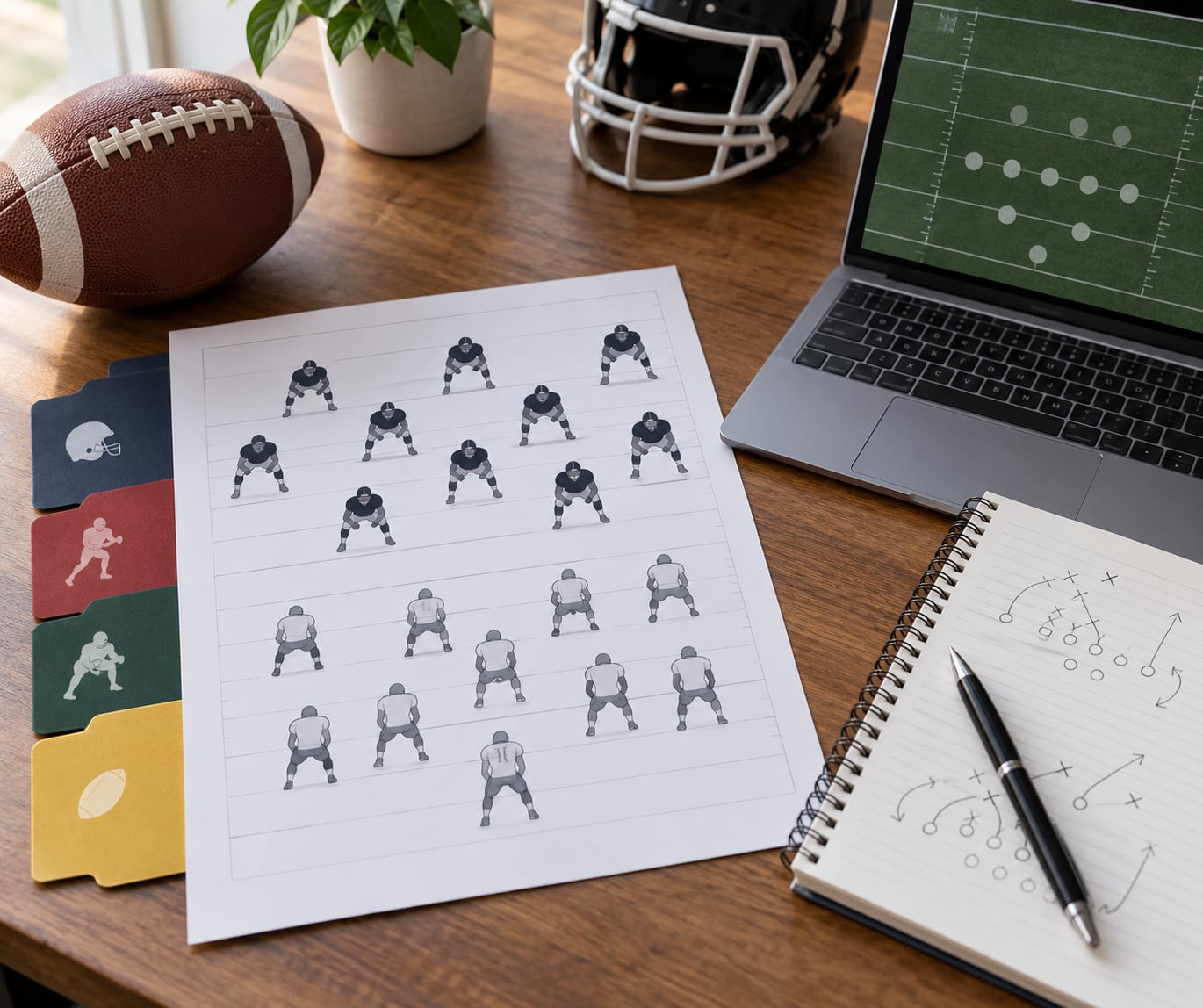
Formation tells you more than rank. A first-team label beside a receiver who lines up in the slot is a different fantasy asset than a first-team label on a player who starts only in a two-receiver set on third and fourth down.
On offense, look for the pre-snap shape. A quarterback who spends the game in shotgun with three or more receivers means a wide distribution of targets. A team that stays in a heavy formation is telling you the run game will eat the carries.
On defense, a nickel defender listed on the first team may start only against specific formations. Read the defensive front as a group and ask who is actually on the field for the pass rush, because pass-rush opportunity is where IDP points come from.
Personnel grouping matters too. If the chart lists four receivers and the coordinator plays 11 personnel, the fourth receiver may be a decoy on the chart and a real target on Sundays.
Cross-Check Practice Reports and Recent News
Build a short verification routine: injury report designations, practice participation, coach comments, transactions, and any reported role change. Five minutes of that usually tells you more than the chart itself.
Learn the practice language. Limited means a player took part in a reduced set. Non-contact means he was on the field but not in contact. Full participation means no restriction. Return from injury means he is back in the mix, not that he is ready for a full workload.
A beat reporter confirming a role change carries more weight than a chart moving on its own. A chart movement with no reported reason is usually noise, and the community treats it that way. The most widely agreed point in r/fantasyfootball is that chart order is a weak prior, not a fact, with rookie running backs moving up being the exception people actually act on.
Translate the Chart into Fantasy Impact
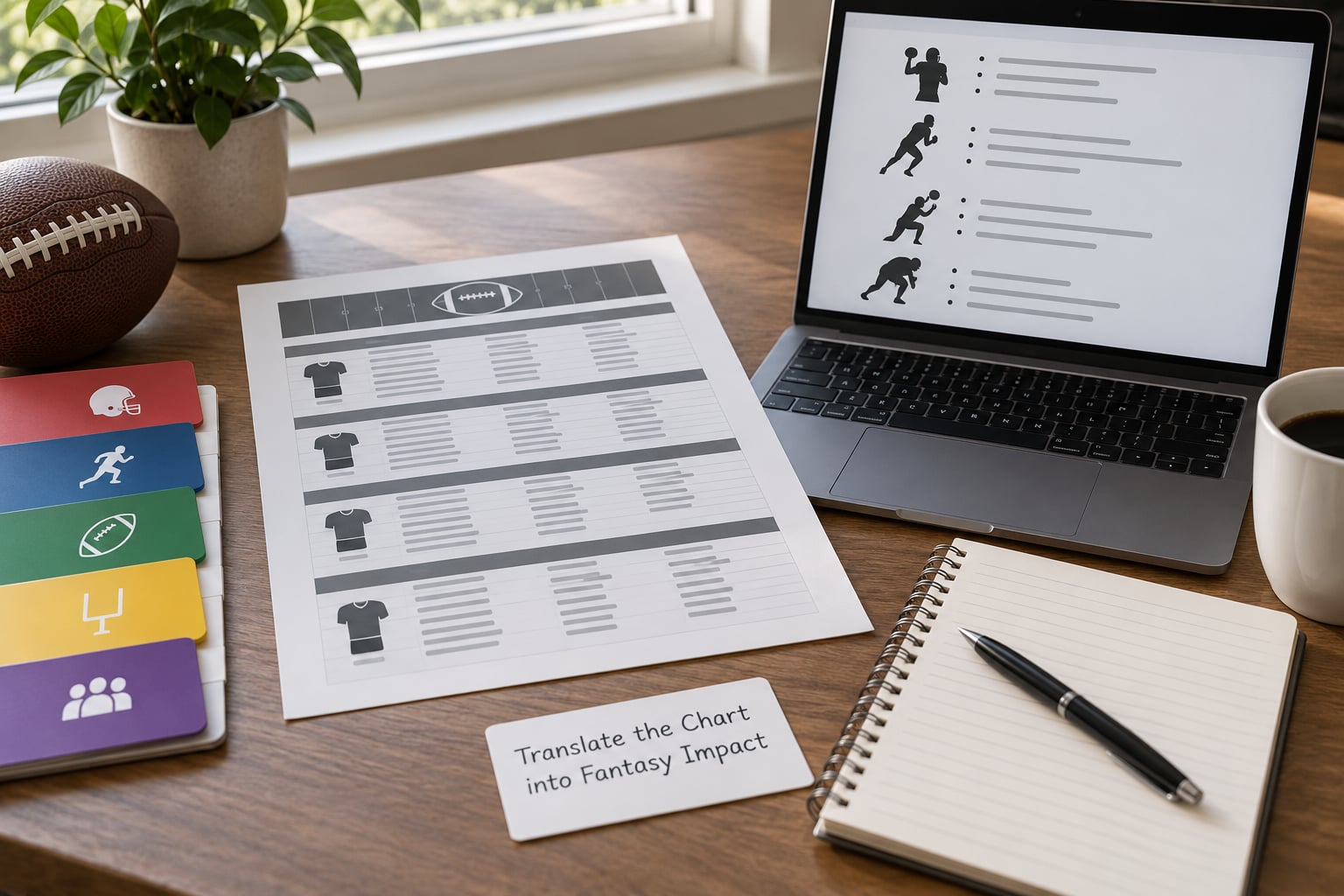
Now connect opportunity to points. The chart rarely splits early-down and passing-down work, so you have to infer it from scheme, coaching history, and what the coach has said about a player.
| Position group | How much the chart matters | Why |
|---|---|---|
| Running back | High | The order maps closely to touches, goal-line work, and pass-catching involvement |
| Wide receiver | Medium to high | Slot and third-down roles matter as much as listed order |
| Tight end | Medium | Blocking and two-tight-end sets can bury a listed starter |
| Quarterback | Medium | One starter, so the chart confirms what you already know |
| Offensive line | Low | Five starters, plus protections and matchup-based swaps |
| Defensive back | Low | Nickel, dime and injury replacement packages change the order weekly |
| Defense as a unit | Medium | Defensive snaps drive points, and the front rarely matches the chart |
Three decisions follow from that. In a redraft, RB1 on a chart with a clear second option means you can take the backup late as your handcuff. In a keeper or dynasty league, a rookie listed behind a starter is a low-value young player unless the beat says otherwise. On the waiver wire, a reported promotion is a reason to bid, not a reason to claim blindly.
Start or sit calls work the same way. A backup who is projected to start a low-scoring matchup against a run-heavy opponent is a start. The same backup projected to start against a team that allows the most fantasy points per game to running backs is a sit.
Confirm the Picture During the Game
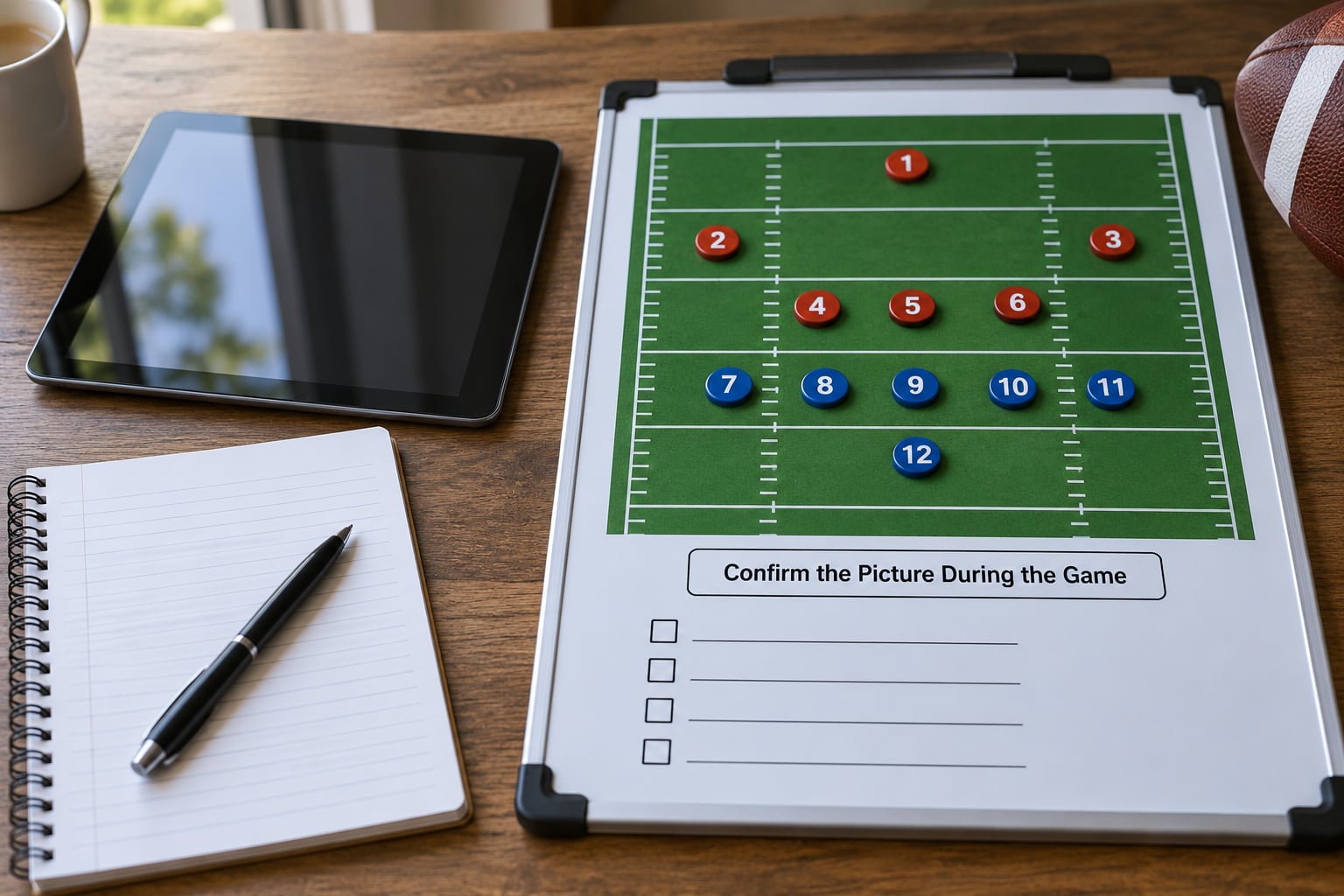
The first two games of the season are where you validate your reading. Track offensive snap share, carries in obvious passing situations, routes run, coverage snaps, and red-zone involvement. The goal is to see whether the player you drafted as the starter actually touches the ball the way a starter touches it.
One game is evidence, not a verdict. A team that ran 18 times for one back in Week 1 may have been protecting an ankle. A receiver who saw four targets could have drawn a lot of coverage.
Repeated patterns are what deserve weight. Three weeks of the same usage pattern is a real role. Then re-rank your own tiers and move on to the next problem.
Common Mistakes
Treating listed order as a guarantee is the big one. Check for “or” markers, rotating pairs, and a date on the chart before you commit to anything.
Ignoring context is second. A chart from the first week of camp and a chart from the week of the opener are different documents wearing the same name.
Confusing a listed starter with a full-time starter causes a lot of wasted draft capital. A name at the top of a receiving column in a two-receiver set is not a 16-game starter.
Overlooking camp injuries explains most surprises. A hamstring held back in August becomes a third-string listing nobody noticed.
Failing to adjust for scheme is the subtlest one. A new coordinator can turn a listed third string into a weekly target in a passing-first offense.
Reacting to one game too strongly flips your roster in the wrong direction. Require a pattern before you move.
Common Mistakes and How to Fix Them
The fix list is short enough to keep on one screen. Use it every week before waivers open.
- Problem: You built your RB tier off a June chart. Fix: Re-read it after the cutdown and again the week before kickoff.
- Problem: You drafted a receiver whose chart line says “or, out”. Fix: Treat him as a streamer, not a cornerstone.
- Problem: You ignored a practice report. Fix: Check participation language each morning, not once a week.
- Problem: You assumed RB1 means 20 carries a game. Fix: Look for goal-line and early-down mentions from the beat.
- Problem: You picked a defense from the defensive depth chart. Fix: Check the pass-rush rotation, not the listed order.
- Problem: Two sites showed different orders. Fix: Trust the team’s own release and the newer date, then check why they differ.
One rule covers all six: use the chart as a single timely signal, then verify opportunity, health, and recent usage before you change a lineup or a roster.
Frequently Asked Questions
Does the first player listed on a depth chart always start?
No. The top name is the coach’s current projection, and projections move. A player listed first may lose the job in camp, sit behind a veteran at a position with heavy rotation, or be an early-down specialist who only appears in certain formations. Check the chart’s date, look for or markers, and confirm with the current injury report before treating the first name as a lock.
How reliable are NFL depth charts before Week 1?
Only moderately. Preseason charts published months in advance describe a roster that has since changed, and coaches often place rookies in reserve spots to avoid creating trade value. Charts get more honest after the final cutdown and much more honest once regular-season games are played. Rank order is a decent prior, but practice reports and beat reporter notes carry more weight in July and August.
What does RB1 mean on an official team depth chart?
RB1 means the running back listed first in the team’s backfield, the player the coaching staff expects to take the most carries. It is not a promise of a workload. Goal-line work, third-down passing work, and coaching decisions can all shift touches to RB2 or RB3. For fantasy value, pair the RB1 label with goal-line and early-down mentions from the beat before projecting touches.
Should I use offensive or defensive depth charts for fantasy football?
Use both, for different reasons. Offensive charts matter most for running back and receiver volume projections, where listed order maps to touches and targets. Defensive charts matter less for IDP because nickel and dime packages reshuffle the backfield weekly, and pass-rush opportunities come from the rotation rather than the listed order. The one exception is defense as a unit, where defensive snaps drive the score.
When should I stop using a depth chart and rely on game usage?
Start leaning on usage as soon as two regular-season games are in the books. Snap share, carries in passing situations, routes run, and red-zone touches describe what actually happened, while a chart still describes what a staff hopes will happen. Keep the chart as a tiebreaker between similar players, and update your rankings whenever a usage pattern repeats for several weeks.
Conclusion
Start with the newest official chart on the team’s site, mark every role that is uncertain or shared, then verify those roles against the injury report, practice participation, and the beat reporter’s notes before you set a lineup or chase a waiver. Once games are played, let repeated usage patterns overrule the paper order every time. That is the whole method: the chart starts the conversation, and usage ends it.