Handling an inactive owner in fantasy football comes down to one rule: confirm the silence is real, then follow your own written rules step by step and keep a record of every notice you sent. Most league trouble in this situation comes from acting without a paper trail, not from making the wrong call. A commissioner who documents the first message, the deadline, the vote and the outcome rarely gets challenged.
An inactive owner is a manager who has stopped running their team: no lineups, no waiver claims, no votes, no answers to trade offers or messages. The practical threshold is not a date, it is a result. Once their team is handing out weekly wins without a decision being made, you are past the point where a friendly nudge helps.
There are two very different problems hiding under that label, and they need opposite responses. A manager who is checked out but still pays their dues is unreachable, not disloyal. A manager who checked out and stopped paying is a money problem, and the league’s financial survival depends on what you do next. Figure out which one you are dealing with before you write a single message.
What follows is the process I would want a commissioner to run, in the order that keeps both the league and their own position intact. It takes anywhere from two weeks to a full offseason depending on how far gone the manager is.
Table of Contents
- What You Need Before You Act
- Step-by-Step: How to Handle an Inactive Owner in Fantasy Football
- Confirm the owner is genuinely inactive, not just muted or away
- Check the league rules before you intervene
- Send a clear reminder and set a deadline
- Choose the right replacement or penalty for your league type
- Document the decision and notify the league
- Prevent the next inactive owner next season
- Platform Mechanics: Removing an Owner Without Deleting the Team
- Common Mistakes When Acting on an Inactive Owner
- Frequently Asked Questions
- How long should I wait before replacing an inactive fantasy football owner?
- What is the best penalty for an inactive owner in a redraft league?
- Can I take over another manager’s team without league approval?
- Should an inactive owner be removed from a dynasty league?
- How do I handle an inactive owner in a keeper league?
- Conclusion
What You Need Before You Act
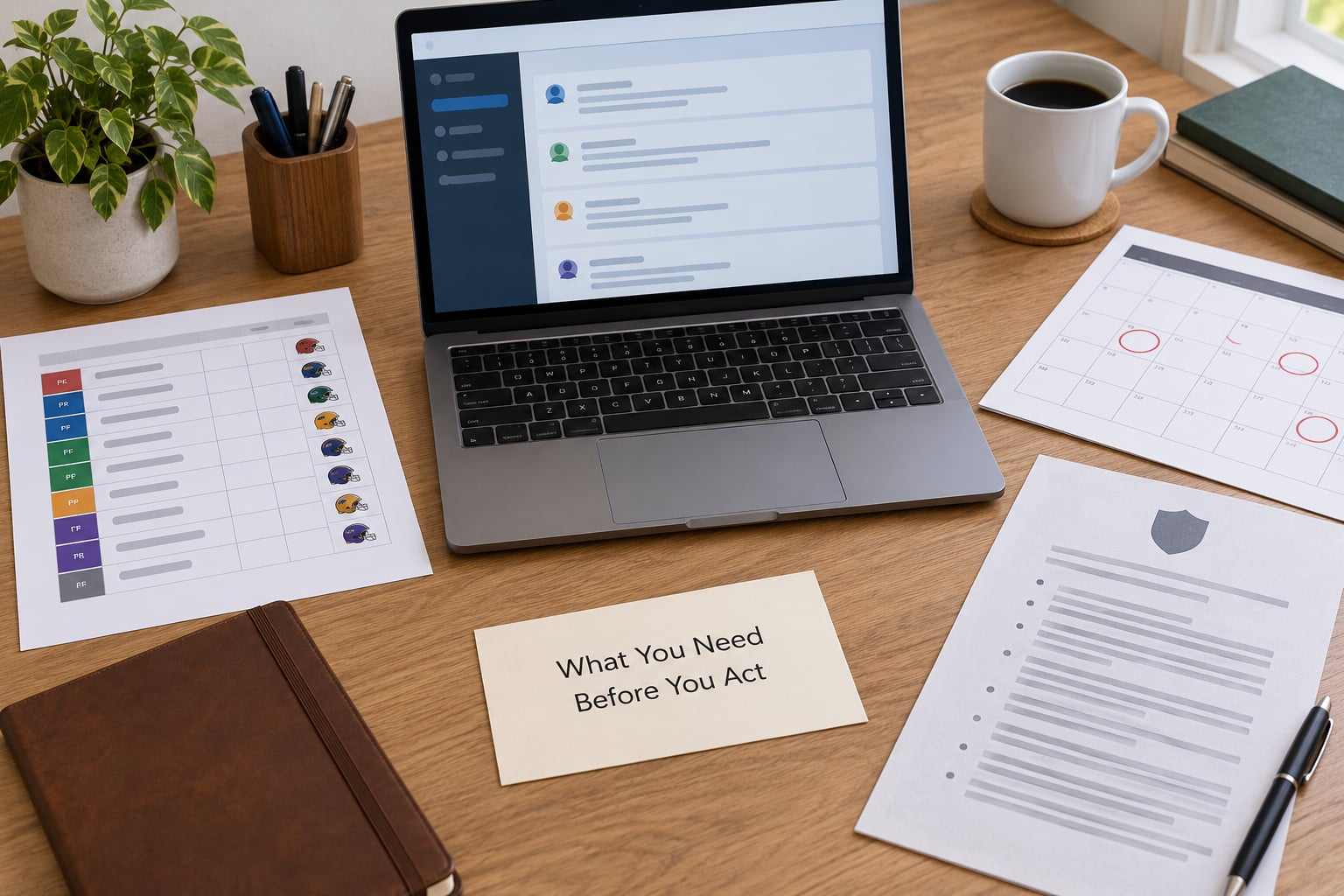
You cannot defend a removal decision you built on memory. Before contacting anyone, gather five things.
Your bylaws, including any amendment history. If your rules are silent on inactivity, that silence is the single biggest problem in the situation, and you need to know it before you act rather than after.
A contact record. Email, phone, and a messaging handle outside the platform. Commissioners on r/FFCommish keep pointing out that owners mute in-app notifications and then look inactive when they are simply unreachable there.
An activity log. Dates of the last lineup, last waiver claim, last trade response, last vote, and last message read. This is what turns an opinion into evidence.
A snapshot of the franchise. Roster, draft position, future picks, and any keeper designations. Whatever you do next, this is what you are protecting.
Your actual permissions. Whether your platform lets you set a lineup for another team, remove a member without deleting the team, or run a league vote. Find that out before the deadline hits, not during a playoff week.
For a paid league, add a sixth item: a simple ledger of who paid, who paid late, and who has not paid at all. It takes ten minutes and it settles arguments that otherwise take a week of messages.
Step-by-Step: How to Handle an Inactive Owner in Fantasy Football
Confirm the owner is genuinely inactive, not just muted or away
Yes, an owner is genuinely inactive when their team produces no weekly decisions and no responses across at least three channels. A missed week or two during a busy stretch is not the same thing as checked out.
Look at behaviour, not silence. Did they set a lineup but never touch the waiver wire? That is a half-managing owner, a different and easier problem than a manager who has abandoned the roster entirely. One r/fantasyfootball thread describes an owner who set zero waiver claims all season while holding the top waiver priority, which made that spot a near-certain weekly win for everyone else. That is a rules conversation, not an eviction.
Test three channels before you decide: an in-platform message, an email, and a phone call or text. Give it a realistic window, and if there is a life event behind it, expect a response eventually. Forum advice across r/DynastyFF and r/FFCommish is consistent on this point, and it is right: real life happens, and the commissioner’s job is partly babysitting.
Check whether the owner is still doing the minimum, and whether they are setting a lineup but leaving injured and bye-week players in the wrong slots. A manager who submits a lineup badly is still in the league. A manager who submits nothing is not.
Check the league rules before you intervene
Read the bylaws first, because a rule that does not exist cannot be enforced after the fact. The recurring line in commissioner discussions is simple: if it is not in the rules, the owner is not at fault.
You are looking for five specific provisions.
- Inactivity definition. A written threshold, such as no lineup for two consecutive weeks or no response to two formal notices.
- Notice and deadline procedure. How many days of warning, through which channel, and how many reminders.
- Lineup authority. Whether the commissioner may set lineups and submit waiver claims for an inactive team, and whether those actions stand in official scoring.
- Missed draft pick ladder. A graduated penalty, not an automatic disqualification. A long-running dynasty commissioner on the FootballGuys forums drafted a three-strike version: first a warning, then the pick is forfeited, then a league vote for the remaining picks.
- Removal process. Notice, a league vote threshold, and what happens to the roster and any fees already collected.
If your bylaws are silent, do not invent a retroactive rule. Run the situation as a league vote with the honest framing that the rules need updating, and adopt the new clause for next season. One r/FFCommish poster described exactly this regret, saying there was nothing in their bylaws about punishing anyone who did not pay on time and that a bylaw would have helped.
It helps to have an escalation ladder agreed before you need it. Something along these lines works well as a starting point:
- First notice. Private message, seven days to respond, no consequence yet.
- Formal warning. Second message plus a league-wide announcement, seven more days.
- Final notice. Written statement of the specific remedy and the date it takes effect.
- Interim management. Commissioner sets lineups and claims while the deadline runs.
- League vote. Removal, replacement search, or roster dispersal, per the bylaws.
Send a clear reminder and set a deadline
A good reminder names the team, states the specific gap, names the remedy, and gives a date. Vague messages get ignored, and an ignored vague message becomes your problem in week 12.
A first nudge should be short and collegial. Something like this works:
Hey, I have not seen a lineup from your team in three weeks. Nothing wrong if life is busy, but I need decisions by Sunday night so you are not forfeiting. If I do not hear back by then I will set the lineup myself under our interim rule. Reply here or email me at this address if the app is not notifying you.
The formal warning is a different document. It restates the dates, quotes the bylaw section, lists exactly what has been missed, and names what happens on a specific date if nothing changes. Keep it factual and slightly cold. Commissioners who soften formal notices into friendliness end up sending a fourth message nobody reads.
Final notice before commissioner action under section 4 of our league rules. Since April 12 there have been no lineups, no waiver claims, and no responses to league votes. As of May 3 I will set lineups and submit claims on your behalf each week. If you want the team managed by you, contact me in writing before that date. After May 20 I will post the team for replacement per the orphan rule.
Send reminders to more than one channel, because muted notifications are the most common reason an active manager looks dead. Email a copy of every formal notice. In a league where payment is involved, say plainly in the final notice whether fees are covered or outstanding, since that changes what the league can do next.
Choose the right replacement or penalty for your league type
The right remedy depends on the format, the timing and whether money changed hands. Redraft, dynasty and keeper leagues each punish abandonment differently.
In a redraft league, the damage is competitive and immediate. The strongest remedy is usually a standing forfeit, where the inactive team loses every matchup from the date of the final notice forward, or an automatic zero for every week it fails to submit a lineup after that date. A reversal of already-played games is the option to avoid, because it rewrites results other managers have banked.
In a dynasty league, the bigger problem is the offseason. An unresponsive general manager costs the league a draft pick, a rookie class allocation and a vote, so the violation ladder belongs in the bylaws before draft night. During the season, the standard remedy is commissioner-managed lineups plus a forfeiture rule. In the offseason, the choice is between requiring future dues before any future pick can be traded, running a dispersal draft that makes the orphan team attractive, or replacing the owner outright.
In a keeper league, protect the franchise rather than punish the person. Keepers and future picks are the league’s assets, so the priority is finding someone willing to inherit them, which usually means posting the team with the full keeper list spelled out.
For the replacement itself, rank the options this way. Direct takeover is best, because a real manager running the roster fixes everything. Dispersal draft comes next, pooling the orphan roster into a shared draft so the team is competitively attractive. A ghost or bot manager running automatic lineups is a stopgap for short-term leagues and a permanent cop-out for dynasty. Refunding the buy-in and shrinking the league is a legitimate choice when a league is already small, and commissioners should not feel bad about it. An eight-team league does not need twelve slots filled at any cost.
One r/fantasyfootball thread about a keeper league illustrates the marketing point better than any rule could. The commissioner could not find anyone to take two teams and was considering a bottom-up draft of the existing rosters, then discovered plenty of people would have taken the teams, and ended up optimizing the lineups himself. Before you restructure the league, check whether you advertised the team in the first place, and where. Post it with the record spelled out, the league format named, and the commitment expected. A six-year dynasty roster with a first-round pick is a saleable asset, but only to somebody who knows it exists.
On money, be specific and be fair. In a paid league where an owner stops paying, the league usually needs the full buy-in redistributed, and a full refund to someone who abandoned the team is hard to defend. A common middle path is to credit the remaining portion of the buy-in to the incoming owner rather than refunding it. Whatever you choose, the notice has to say it in advance, and the vote has to approve it, because a money decision made unilaterally is the fastest way to lose the league.
Document the decision and notify the league
Write down what you did, when, and why, in a place the whole league can see. A running commissioner log with dates of every message sent and read turns a personality dispute into a record.
When you announce it, keep the announcement about the league rather than the person. State the rule that applied, the dates of the notices, the remedy chosen, and the effective date. If a vote happened, give the tally. If you made a judgment call, say which bylaw section supported it.
Two things to avoid. First, do not describe the owner’s personal circumstances in a league-wide post, because you do not know them and the post will be read as a campaign. Second, do not retroactively change completed games, since a manager who sees a locked result move has no way to trust any result you report again.
If the removal is going to split the league, handle it socially before you announce it. Talk privately with your two or three most active managers first, not to build a voting bloc, but so the announcement does not land as a surprise. Commissioners describe this as the difference between a rule and a coup.
Prevent the next inactive owner next season
The best fix happens in the offseason, before the league is already uneven. Five things reliably cut the odds.
- Adopt a written inactivity clause with a graduated ladder, including the missed-draft-pick violation, before the 2026 season starts.
- Collect a contact email from everyone, verified at signup, so a platform mute never hides a manager again.
- Set dues deadlines with reminders, and put the date in the league charter rather than a direct message.
- Run league events in the offseason, such as a veteran draft or a rookie allocation vote, because participation is easiest to see when there are no games to hide behind.
- Keep a shortlist of interested replacements from people who asked to join and never got a slot.
Poll rule changes when people are actually around. A vote passed in January tells you who is checked in and who is not, and that is useful information you cannot get any other way.
Platform Mechanics: Removing an Owner Without Deleting the Team
Yes, you can remove an owner and keep the team on every major platform, and the distinction matters more than most people realize. Removing a member and deleting a team are separate actions on most sites, and a stray click on the wrong one can destroy years of history.
A Fleaflicker forum user learned that the expensive way, accidentally erasing two years of roster history by hitting the wrong control. The explanation they got back was reassuring in a way that should comfort every commissioner: the first click removes only the owner as long as the team still has players and history, and deleting the team is a separate, deliberate step.
| Platform | Remove the owner, keep the team | Transfer ownership directly | Commissioner sets lineups | Reversible |
|---|---|---|---|---|
| Sleeper | Yes, remove the member from the league and the team stays intact for reassignment | No built-in transfer, the team is reassigned to a new member | Yes, with commissioner tools | Yes, if the roster was untouched |
| ESPN | Yes, removing a member frees the team slot without deleting the roster | No, ownership passes to the next eligible member | Yes, but scoring may not credit it | Only if the team was not deleted |
| Yahoo | Yes, remove member and keep the team for takeover | No direct transfer, reassign the team | Yes, in most league formats | Case by case, depends on whether a trade window passed |
| NFL.com | Yes, but the free-league flow often removes the team too, so read the dialog carefully | No | Yes | Unreliable, check the team exists before confirming |
| Fantrax | Yes, remove the user and reassign the franchise | Yes, ownership can be reassigned in the league settings | Yes | Yes |
| Fleaflicker | Yes, the first click removes the owner only, deleting the team is a separate action | Yes, admin tools support a takeover | Yes | Only if the team was not deleted |
Treat this table as a starting point, not gospel. Interfaces change every few months, so confirm the behavior in a test league or through the platform’s own help documentation before you do it for real. The one thing that holds across all of them is the safety habit: confirm the team roster still exists before you click the final confirmation.
Once the owner is gone, the team becomes an orphan team, a roster with no manager but intact assets. Orphan handling is a separate decision from removal, and it is the part most leagues rush. Decide what happens to the players, the draft position, and the keeper designations, and write that down before you start looking for a new owner.
Two more situations you will meet eventually. First, an owner who goes quiet and then returns. Be gracious, set a written condition for their return, and be clear about what happens to the team if someone else has already taken it. Second, pending trades and commitments. A trade that requires the inactive owner’s approval cannot be forced through on most platforms, so record it as pending and resolve it under your rules rather than leaving it in limbo.
Common Mistakes When Acting on an Inactive Owner
Acting without notice. Removing a manager who has never received a formal message is the fastest way to lose a league vote, even if you were right. Notice is what converts a decision into a process.
Replacing someone too quickly. Two quiet weeks during a busy month is not the same as abandonment. Give the owner a defined window, and only count missed weeks after the notice goes out, so the count is clean.
Ignoring your own rules. If the bylaws are silent, the honest move is a league vote and a new clause for next season. Retroactive rules are the fastest route to a league full of people who distrust the results.
Redistributing the roster unfairly. Handing the orphan players to the last-place team, or giving them away in a side deal, punishes the managers who stayed. Use a documented mechanism, and a dispersal draft is the one that survives arguments.
Treating a deadbeat and a checked-out owner the same. One is a money problem, the other is a participation problem. Mixing them up means you send a payment demand to someone who already paid, or you overlook a balance the league is absorbing.
Rewriting completed games. Retroactive forfeits feel satisfying and cost you credibility. Apply consequences going forward, and publish the effective date.
Letting friendship decide. The one rule that protects you when the inactive owner is a friend of your strongest manager is simple, and it is the rule that has to be absolute: the same threshold, the same notice, the same remedy, every time. Commissioners who carve out exceptions explain them for years.
Skipping the money conversation. If the league is paid, a removal changes the pot. Announce the financial arrangement in the same post that announces the removal, or the first manager who does the math will assume the worst.
Frequently Asked Questions
How long should I wait before replacing an inactive fantasy football owner?
Most leagues land on three to four weeks of documented silence before a replacement search, starting from the date of your first formal written notice rather than from the last lineup. Two consecutive missed lineups is a fair trigger for a reminder, four to six for a takeover post. In dynasty, wait until the offseason unless the owner is forfeiting games, because the season roster is not the asset you are trying to rescue.
What is the best penalty for an inactive owner in a redraft league?
A standing forfeit from the date of your final notice is the cleanest option, paired with commissioner-set lineups in the meantime. Automatic zeroes for every week the team fails to submit after that date work well too. Avoid reversing games that already finished, since it rewrites results other managers have already banked and undermines trust in every score you report.
Can I take over another manager’s team without league approval?
No. Taking over a team is a transfer of a league asset, and doing it privately is the version that ends leagues. Post the team publicly, run the vote your bylaws require, and get the approval on the record before anyone manages the roster. On most platforms you can remove the owner and keep the team, so there is never a reason to shortcut the process.
Should an inactive owner be removed from a dynasty league?
Only after a documented process, and rarely in a hurry during the season. The offseason is the real risk, so put a missed-draft-pick violation ladder in the bylaws before draft night, with a warning, then a forfeited pick, then a league vote. Many commissioners instead require future dues before an inactive owner can trade a future pick, which protects the league without ending the relationship.
How do I handle an inactive owner in a keeper league?
Protect the franchise first, since keepers and future picks are the league’s value. Post the team with the full keeper list, draft slot and record spelled out, and require the incoming owner to honor the existing keepers rather than renegotiating them. If nobody takes it, a dispersal draft of the orphan roster keeps the team competitive, and in a small league a refund and a smaller league size is a perfectly reasonable outcome.
Conclusion
Verify the inactivity with evidence rather than impressions, read the bylaws before you act, and send every notice in writing with a real deadline. Then apply the remedy the league already agreed to, from the date that notice went out, and write down what you did and why.
If your bylaws are silent on inactivity, that is the fix for next season. Adopt the clause and the violation ladder now, while you have a live example to point at.