How to pick draft order fairly in fantasy football comes down to four tests: the method is published before draft day, every manager has an equal or openly agreed chance at each pick, anyone can verify the result afterward, and tiebreakers are written down in advance. A weighted lottery run on a public randomizer clears all four. Randomizing in the league chat an hour before the draft clears none of them.
Most arguments about draft order are not about the outcome. They are about the process. A manager who watched the same randomizer everyone else watched rarely complains about the slot they got, and the commissioner who wrote the rules down before the draw has nothing to defend at draft time.
It is still worth putting the whole process in writing once per season, because the 2026 draft is usually the first one a returning league gets right.
I have run this process across a few leagues, and the version that survives a bad night is always the boring one: agreed rules, neutral tool, saved evidence. The method below works for a startup league, a dynasty league that keeps its order for years, or a 12-team group spread across three timezones.
Table of Contents
- What You Need
- Step-by-Step
- Set the League’s Draft-Rule Rules First
- Confirm Every Manager Is Eligible for the Draw
- How to Pick Draft Order Fairly in Fantasy Football: Choose a Neutral Method
- Run the Draw in Front of the League
- Lock the Order and Resolve Any Disputes
- Use a Repeatable Fair-Draw Checklist
- Common Mistakes and How to Fix Them
- Which Draft Slot Is Actually Best?
- Draft Order Rules for Remote Leagues
- Frequently Asked Questions
- Should draft order be completely random in a snake draft?
- Can a commissioner assign draft order manually?
- What is the fairest way to break ties in the random draw?
- Should I use an online randomizer for fantasy football draft order?
- How do weighted draft lotteries give worse teams better odds?
- Conclusion
What You Need
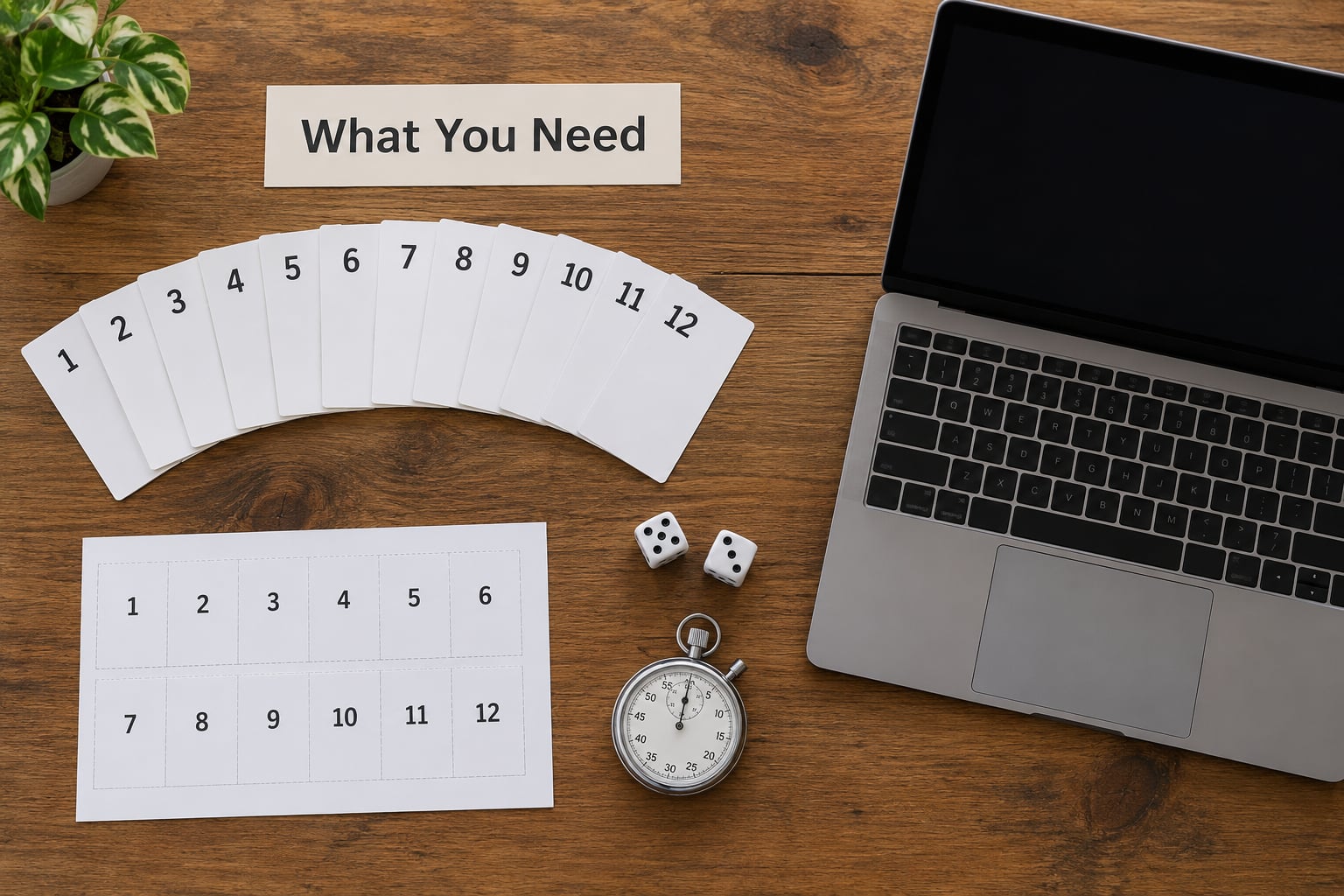
Gather these before you message the league. Most disputes trace back to something that was never written down.
- League settings — number of teams, scoring format, roster size, and whether the draft is snake or linear.
- The list of eligible managers — team names, managers, and any team that has forfeited its slot.
- The method in writing — a single paragraph the league voted on, posted before the draw.
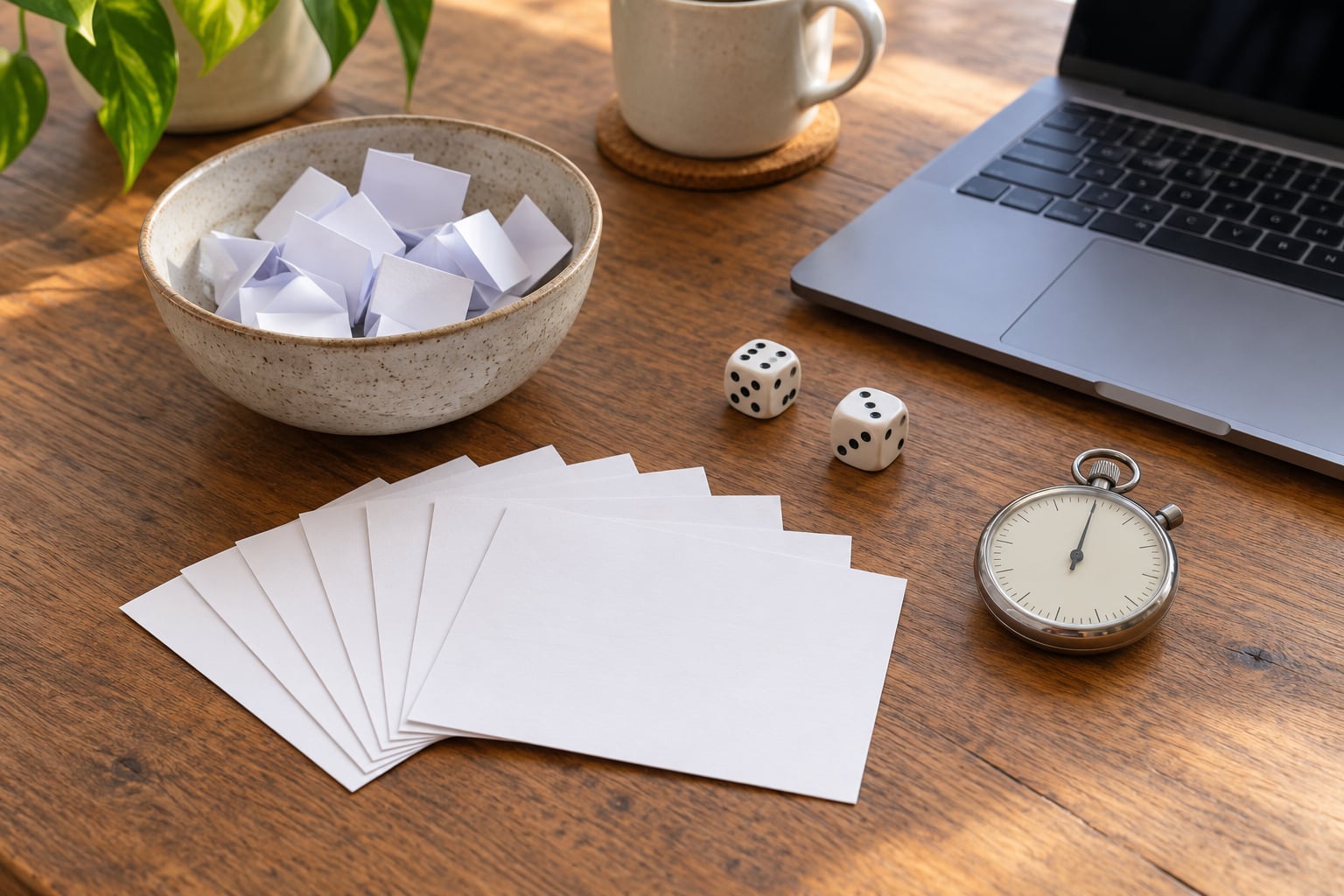
- A neutral random source — a reputable online randomizer, numbered paper slips, or a wheel.
- Someone neutral to run it — the commissioner is fine, and a leaguemate is better if they are not a contender for a prime slot.
- A place to record the result — a shared doc, an email, or screenshots saved to the league folder.
- Enough lead time — set the order at least a week out so managers can mock draft. A league that decides on draft night cannot prepare, and preparation is where leagues are actually won.
The last item matters more than people expect. A manager who knows pick 6 three days early can build a board around it. A manager told at the table gets 90 seconds and takes what they can reach.
Step-by-Step
Six steps, in this order. The order matters because the earlier steps are the ones that prevent arguments.
Set the League’s Draft-Rule Rules First
Decide the draft format before you decide the order method. In a snake draft, each manager picks once per round in alternating order, so every slot delivers one early pick and one middle pick. In a linear draft, everyone picks in the same sequence every round, which makes the first pick far more valuable than the last.
That single choice changes what fair means. In a snake draft, equal random odds are defensible because the schedule balances itself. In a linear draft, most leagues use reverse standings so the last pick gets the first pick of every round.
Also settle three smaller questions in the same vote:
- Does a team that forfeits give up its slot, and does the slot pass to the next eligible manager or revert to the bottom?
- If two managers end the year tied, which tiebreaker sets their seed — total points, head-to-head record, or points against?
- Does a competition winner get assigned a slot, or do they choose from the remaining slots?
Post that paragraph in the league chat and get a thumbs-up from every manager. That confirmation is what you point back to when someone wants a different rule after they see the result.
Confirm Every Manager Is Eligible for the Draw
Eligibility has to be settled before anyone knows what the draw produces. If a manager is added or dropped after the draw, that is when leagues fracture.
Build the list of eligible entries with team name and manager name, then send it around for correction. Anyone who is not on the list by the deadline is not in the draw, and any correction they request has to happen before the randomizer runs, not after.
Forfeits need a written rule too. In a 12-team league where one manager never paid dues, my preference is that the forfeited slot goes to the next eligible manager rather than to the commissioner. Handing the commissioner a pick is the fastest way to make the process feel rigged.
How to Pick Draft Order Fairly in Fantasy Football: Choose a Neutral Method
Match the method to the league. These are the ones that hold up because they are easy to run and easy to check.
- Unweighted online randomizer — every manager enters once. Simple, quick, and the default for most leagues.
- Weighted lottery — last place gets four entries, second-to-last gets three, down to one entry for the champion. More on the odds below.
- Numbered paper slips — one slip per entry, folded, dropped in a bowl, drawn by a neutral party. Works with no internet and no screens.
- Reverse final standings — the standard method for any league with a prior season. Not random at all, and managers know it going in.
- Skill competition — 40-yard dash, mini golf, QB passing yards, a spelling bee. Fun, but only fair in a league where athletic or gaming ability is roughly even.
- Hybrid — random draw sets the order, then any manager may swap with another manager by mutual agreement before the draft starts.
Whichever one you pick, the deciding question is whether a manager could see it coming. A 40-yard dash in a league with one ex-college athlete is not a fair draw, no matter how many times the commissioner swears the finish was close.
Run the Draw in Front of the League
This is the part that builds trust, and it takes about five minutes. Screen-share the randomizer on a call, or put the bowl on the table where everyone can see it. Learning how to pick draft order fairly in fantasy football is mostly about this five minutes, not the tool you pick.
For a weighted lottery, the mechanics are simple once the entries are set. In a 12-team league with a 4-3-2-1 weight, the entries total 30: the last-place team has 4, and the first-place team has 1. Every entry carries the same odds, so the last-place manager’s chance of picking first overall is 4 out of 30, roughly 13 percent, against 3.3 percent for the champion.
Run the draw once. Record the timestamp, take a screenshot of the result, and paste it into the league channel with the entry list attached. If you want a verifiable seed, most reputable randomizers print or export one, and anyone with the entry list and the seed can reproduce the same result.
Lock the Order and Resolve Any Disputes
Publish the final order the same day, in the same format, with the evidence attached. Write this into the league rules:
Draft order for the [year] season was determined on [date] using [method] with these entries: [list]. The result was recorded at [timestamp] and saved in the league folder. Any challenge must be raised in the league channel within 48 hours and must cite a specific rule above. Challenges raised on draft day are not heard.
The 48-hour window is what keeps a complaint from derailing draft night. A challenge with a real basis is almost always about a procedural detail — a missing manager on the entry list, a weight applied to the wrong team — and those get fixed by rerunning the draw with the corrected list in front of everyone.
Set the tiebreaker before you need it. A second draw from the same randomizer is the cleanest option, followed by a coin flip witnessed on the call, and last an alphabetical rule for leagues whose members already have alphabetical priority for waivers.
Use a Repeatable Fair-Draw Checklist
Run this list the moment before the draw. It takes two minutes and it covers the six things that actually cause arguments.
- Method and rules posted, with every manager’s acknowledgment on record.
- Entry list confirmed, including weights if you are using a lottery.
- Deadlines for eligibility corrections already passed.
- Randomizer verified — check it produces a result, then refresh or reopen the page before you trust it.
- Neutral person running the draw, with the league watching.
- Screenshot and timestamp saved before the meeting moves on.
Keep the checklist in the league folder with the saved result. Next season, the only work is confirming the entries again, and the process that builds trust runs itself.
Common Mistakes and How to Fix Them
Every one of these has burned a league I have been in or heard about. All of them are avoidable with a decision made a week early.
| Mistake | Why it causes trouble | Fix |
|---|---|---|
| Rerolling an unfavorable result | Only visible when people compare timestamps, and it ends the league’s trust permanently. | One draw, one record. If the tool errors, close it and reopen it before any entry is generated. |
| Changing the method late | The change always looks like it was made to favor someone. | Vote on the method 30 days out. After that, only a unanimous written agreement changes it. |
| Excluding a manager without notice | The excluded manager always finds out, usually from someone else. | Publish the entry list with a correction window before the draw. |
| Using an unverified randomizer | A tool that reshuffles, remembers results, or is run twice produces an order nobody can check. | Use a tool anyone can open and test. Save the seed or a screenshot. |
| Deciding the order on draft day | No time to mock draft, and the commissioner looks like they chose. | Set the order at least a week ahead. This is the single highest-value change on the list. |
| Letting the commissioner pick | The commissioner is rarely a neutral party, even with good intentions. | Assign the slot by the agreed method, or hand it to the lowest entry in the draw. |
| Skipping the tiebreaker rule | Ties are common in short seasons, and there is always one at the boundary. | Pick the tiebreaker in the same vote as the method. |
| Trading or cherry-picking slots | One trade turns into three, and the league ends up stacked. | Allow swaps only by mutual agreement, and close the swap window when the draft starts. |
Two habits keep the goodwill intact. Run the draw earlier than the league needs, so a bad result has time to be absorbed. And when a manager has a genuinely bad slot, remind them that in a snake draft the picks are not as unequal as they feel, which is the subject of the next section.
Which Draft Slot Is Actually Best?
Managers argue hardest about this, so the short version is useful: in a standard 12-team snake draft, picks 1 and 2 are generally stronger than picks 5 through 7, because they give you a top-of-round-one selection and, after a terrible round two, another early pick in round three. Picks 9 through 12 are the mirror image — a late first-round pick, then two of the best picks in round two.
Leagues that settle their order with a mini golf or putting competition usually find that any of the top four feels close to interchangeable. That is roughly right. The gap between pick 1 and pick 4 is smaller than the gap between pick 4 and pick 12.
It also depends on scoring. In PPR leagues, running backs and receivers carry most of the weekly ceiling, so the early picks are worth more and the middle of the board is less punishing. In standard scoring, the difference narrows because the position scarcity sits at quarterback and tight end.
That is the argument for letting a competition winner choose their own slot instead of assigning one. If the winner is picking a great draft strategy, let them take the slot they want from what is on offer, and let the remaining slots be assigned by the agreed order. Nobody is disadvantaged, and it removes the worst kind of argument.
Draft Order Rules for Remote Leagues
Leagues spread across timezones need a method that survives an asynchronous week. The protocol that works: the commissioner posts the rules and entry list on a Monday, everyone confirms by Wednesday, and the draw happens on a scheduled call on Thursday. Managers who cannot attend send their acknowledgment in writing beforehand, which is the only substitute for witnessing the draw.
For something more fun than a browser randomizer, leagues are running timed events over video — a putt-putt round, a video game race, a trivia bracket — and running the full draw on screen afterward so the competitive part decides who competes and the random part decides the order itself. Splitting it that way keeps the event from quietly deciding both.
Keep one rule specific to remote leagues: no one reruns anything privately. If a manager wants a rematch, the rematch happens on a call with everyone present, and both results are recorded.
Frequently Asked Questions
Should draft order be completely random in a snake draft?
Usually yes. A random draw gives every manager the same chance at first pick and last pick in each round, so the snake format keeps the imbalance small. Leagues that want the champion punished for a good season often use a weighted lottery instead, where last place gets more entries and the champion gets one. Pick the approach the league votes on before draft day, not after.
Can a commissioner assign draft order manually?
Only when the league agreed to it in advance and the process is transparent. If everyone signed off on a random draw, the commissioner reassigning slots afterward destroys the reason the draw happened. A safer version lets the commissioner draw the order but not choose it, or lets the lowest entry in the draw take the commissioner’s slot if one exists.
What is the fairest way to break ties in the random draw?
Decide before the draw. A second draw from the same randomizer is the cleanest option, since it uses a tool everyone already trusts. A coin flip witnessed on the league call works too. For leagues whose members already have alphabetical priority on waivers, an alphabetical tiebreaker is the simplest because it needs no equipment and no witnesses.
Should I use an online randomizer for fantasy football draft order?
Yes, as long as the league verifies the tool before drafting. Open it, run a test draw, then refresh or reopen the page so nothing stale is carried over. Run it once, on screen, with everyone watching, and save a screenshot or an exported result. Most reputable randomizers also print a seed, and anyone with the entry list and that seed can reproduce the order.
How do weighted draft lotteries give worse teams better odds?
Each team gets multiple entries in the same draw, and every entry carries the same chance. In a 12-team league with a 4-3-2-1 weight, entries total 30, so the last-place team holds 4 of 30 entries, roughly 13 percent, and the champion holds 1 of 30, about 3.3 percent. Weight every entry identically or the odds stop being fair.
Conclusion
If you do one thing, agree on the method and the tiebreaker in a written vote, then set the order a week before the draft so everyone can mock draft. Run the draw once, in front of the league, with a neutral random source, and save the entry list, the timestamp, and the result together. That is the whole of how to pick draft order fairly in fantasy football.
That process takes half an hour of setup and removes the one argument that can wreck an otherwise good league before a single player is selected.