Here’s the short version: in a survivor football pool, you pick one NFL team each week to win straight-up, you can only use each team once all season, and the week your team loses you are out. The last entry still standing at the end takes the prize.
It’s the easiest way I’ve found to follow a whole NFL season without managing rosters, injuries or waiver wires. One decision a week, and every decision matters more than the last one. What makes it interesting is that the format punishes impatience far more than bad picks.
Table of Contents
- What Is a Survivor Football Pool?
- How Survivor Football Pools Work Step by Step
- What Happens When You Choose a Team?
- What Are the Most Common Survivor Pool Formats?
- How Survivor Pool Payouts and Ties Work
- How Survivor Football Pool Strategy Works
- Common Questions and Mistakes to Avoid
- Frequently Asked Questions
- How do I play in an NFL survivor pool?
- Can you pick the same team twice in a survivor pool?
- What happens if a game ends in a tie in a survivor pool?
- How many entries should I have in a survivor pool?
- How are survivor pool prizes paid out?
- Conclusion
What Is a Survivor Football Pool?
A survivor football pool, also called an eliminator pool, is a contest where each entry chooses one NFL team per week to win straight-up. Each team can be used only once per season, and choosing a losing team eliminates that entry immediately and permanently. The last surviving entry, or a group of co-winners, takes the pool.
A commissioner runs the pool, usually through a website or app. Friends, coworkers or strangers buy an entry, make a pick before each week’s deadline, and watch the results roll in on Sunday. Most pools run the full 18-week regular season, and plenty of them keep going into the playoffs.
Entries are often free, though plenty of pools charge a fee and pay out the collected money to the winner. Some pools pay out top three or five finishers instead of just the winner, which is a common variant worth checking for.
How Survivor Football Pools Work Step by Step

The mechanics are simple enough to explain in one pass, and once you have the sequence in your head the rest of the format stops being confusing.
- The commissioner sets the rules. That means straight-up or against the spread, whether a team can be picked twice, how many entries exist, whether ties count as a win, and where the money goes if there are co-winners.
- You buy an entry and make a Week 1 pick. Most pools open a few days before the season, and the first pick is usually due before the first game of the week.
- Your pick locks in at the deadline. Once games start, the choice is final. Players on r/NFLSurvivor specifically value platforms that freeze a pick the moment the week kicks off rather than letting it sit changeable all Sunday morning.
- You find out Sunday night whether you survived. Win, you advance. Lose, and that entry is done.
- Survivors pick again the following week. A new team, one not used before in the season.
- The pool ends when one entry is left, or at the end of the season. If two or more entries survive to the final week, the pot is split.
An r/quant breakdown of the format put it plainly: 18 weeks, no spread, and one pick per team per season. That constraint is the entire game.
What Happens When You Choose a Team?
Your pick is graded as a straight-up result in most pools: win the game and you’re alive, lose it and you’re eliminated. Point spreads play no part unless the pool is explicitly an against-the-spread format.
Say you take the Bengals in Week 1 and they beat the Buccaneers 27-20. You’re still in. Week 2 you take a different team, and it loses 24-10 in a game most people had the other way. That entry is finished, even if your original analysis of the season was perfect.
Ties are the detail beginners miss. Most pools count a tie as a loss, which has burned a lot of people over the years, including a 2021 Steelers-Browns tie that generated an entire thread on r/fantasyfootball asking what actually happens. Some hosts rule otherwise, so read your pool’s rules rather than assuming.
Missing the deadline is the other trap. Depending on the pool you get eliminated, you inherit the host’s default pick, or you get the first unused team in the standings. That’s a rule, not a bug, and it’s exactly the kind of thing that ends a season before it starts.
What Are the Most Common Survivor Pool Formats?
Format is where survivor pools differ most, and it changes the risk profile more than any other setting. The table below covers the versions you will actually run into.
| Format | How it works | Elimination rule | Typical use |
|---|---|---|---|
| Standard survivor | One team per week, straight-up | One loss ends the entry | The default for most season-long pools |
| Half survivor | Pick two teams each week | Both must win | Short season, faster finishes |
| Quarter or third survivor | Pick four or three teams each week | All picks must win | A condensed pool that ends early |
| Losers pool | Pick a team to lose each week | Your team winning ends the entry | A fun twist on an existing pool |
| ATS survivor | Picks must cover the point spread | Missing the spread ends the entry | For players who already handicap games |
| Strike format | Standard picks, but with multiple lives | Out after two or three losses | Larger fields that stay interesting longer |
| Double-pick week | Two teams required in a specified week | Both must win | Thanksgiving and Christmas slates |
| Buyback or mulligan | Re-entry allowed at a higher fee after elimination | Varies by buyback deadline | Keeps a small private pool alive |
Half, quarter and third survivor formats work by making each weekly pick harder. You are not eliminating faster week to week, you’re making every single week a multi-team proposition, and the pool tends to resolve in far fewer weeks.
How Survivor Pool Payouts and Ties Work
The prize pool is usually the collected entry fees, sometimes minus a hosting fee. In a winners-only pool, the last surviving entry takes all of it. If two entries survive to the final week and both lose, they are co-winners and split the pot.
Many pools pay consolation amounts to the final four or final eight, and the split can be structured so the winner still takes the largest share. Those specifics live in the commissioner’s rules, which is why the same app can produce two very different payout structures.
Paid-entry survivor pools sit in a legal area that varies by state, and operators typically publish their rules in advance and describe the contest as one of skill rather than chance. That is a factual note, not legal advice; if real money is involved, read the published rules and check what your state allows.
On raw odds, a large public pool is a hard thing to win, because you are competing against thousands of entries and many of them pick the same heavy favorite every week. In a pool where everyone chose the same team, that team either rescues the whole field or wipes out the entire pool in one afternoon.
How Survivor Football Pool Strategy Works
Two schools of thought show up constantly on survivor forums, and they apply to genuinely different situations. Play to win means always taking the team most likely to win, because in a large field with a payout to the last survivor, expected value beats caution. Play to survive means protecting yourself in a small pool where the only thing that matters is being the final name left.
The counterargument to always picking favorites is pick rate. When 60% of a small pool takes the same team, the remaining picks are doing more work, and a team nobody wants can hand you a share of the field that the favorite pickers do not own. That edge is real in pools of 20 people and mostly irrelevant in a pool of 20,000.
A few habits make the season easier to manage:
- Check the pick deadline the moment you first open the pool settings, then again in week one. That is where entries quietly die.
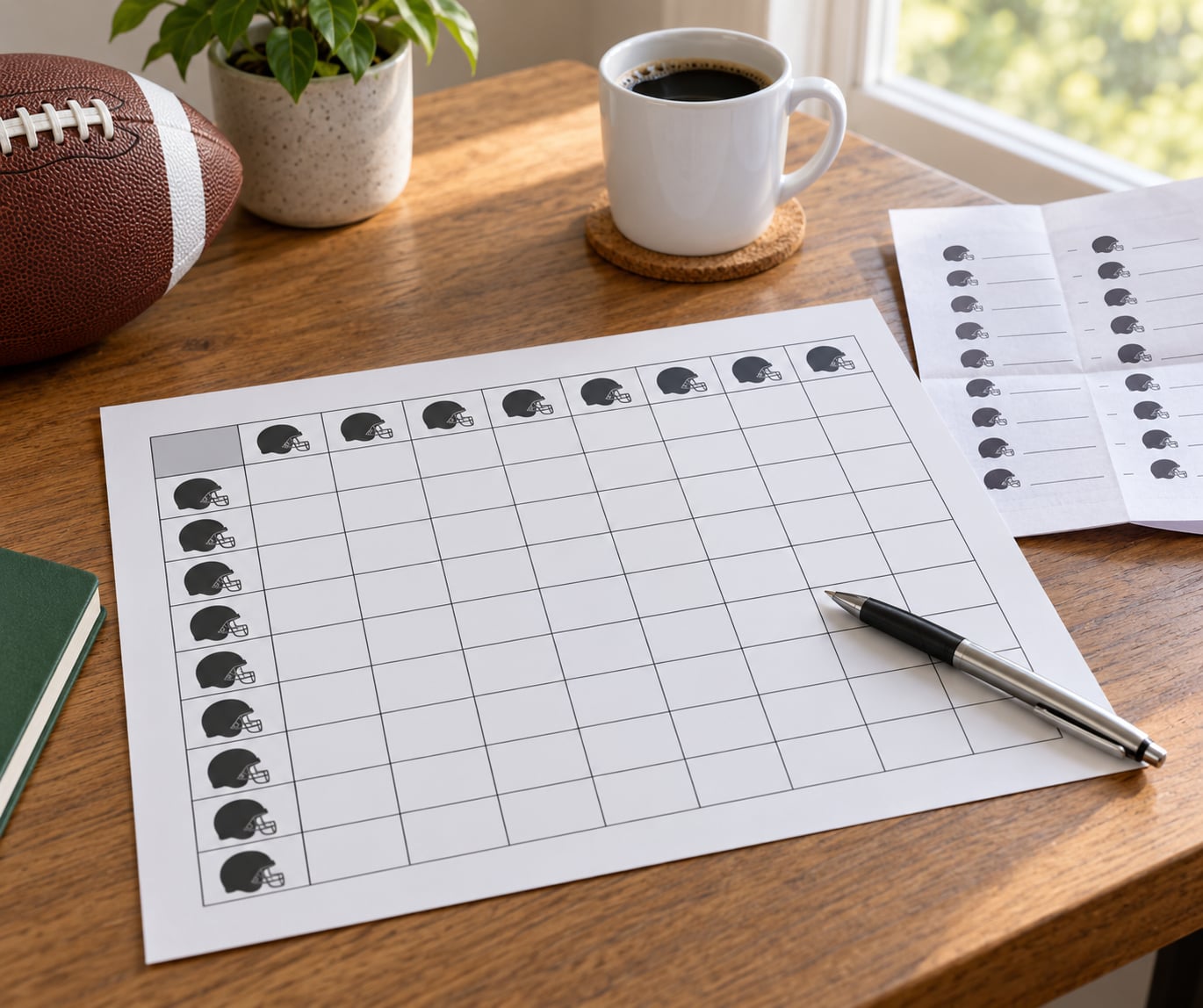
- Keep a grid or spreadsheet. Users search for survivor pool grids for a reason: eighteen weeks of team names is genuinely hard to hold in your head.
- Do not spend a contender in a week with three obvious favorites.
- Expect a bad stretch. By December the survivors are often teams nobody wanted, and that is normal rather than a sign the pool is broken.
- Decide your strategy before Week 1 instead of re-deciding every week.
Common Questions and Mistakes to Avoid
The most common error is not a bad pick. It is confusion about which format you are actually playing. Survivor, eliminator and pick’em get used interchangeably in conversation, and they are not the same thing.
A pick’em pool asks you to pick winners every week whether they win or not, and the entry with the most correct picks takes the money. Survivor eliminates you after a single wrong pick. A mode inside a pick’em app can still be a true survivor game with its own rules, so check what the host set up.
The other recurring mistakes:
- Burning your best teams early. Using every strong team by Week 5 leaves nothing for the stretch run.
- Ignoring tie rules. Most pools count a tie as a loss.
- Missing the lock-in time. Pick deadlines are firm.
- Not reading the pool’s own rules. Straight-up or spread, one pick or two, entry limits, payout structure.
- Entering too many copies of one strategy. Multiple entries help only when the picks differ.
- Panicking in Week 13. The remaining games are usually ugly, and that is where survivors are made.
Frequently Asked Questions
How do I play in an NFL survivor pool?
You pick one NFL team each week to win straight-up, and each team can be used only once per season. Your pick locks in at the weekly deadline. Win and you advance to the next week, lose and your entry is eliminated for good. The last surviving entry, or a split among co-winners, takes the prize pool.
Can you pick the same team twice in a survivor pool?
In most standard survivor pools, no. Each team can only be used once across the entire season, which is what makes the format run out of safe options by December. Some hosts relax this or allow repeats in later weeks, and a few formats let you pick a team twice in the same week. Check your pool’s rules, because the no-repeat rule is the one most often assumed rather than confirmed.
What happens if a game ends in a tie in a survivor pool?
Most pools count a tie as a loss, so your entry is eliminated even though neither team won. That rule catches beginners out during tie-prone late-season games. A small number of hosts use push rules, where the pick carries over to a later week. This one detail is worth confirming with the commissioner before Week 1 rather than discovering it in October.
How many entries should I have in a survivor pool?
It depends on the field and the prize structure. In a small private pool, extra entries that repeat the same picks add no value, because those entries succeed and fail together. In a large paid pool, several entries with different strategies improve your chances. Users on r/quant and r/NFLSurvivor generally suggest keeping entries small unless you plan to vary the picks meaningfully across them.
How are survivor pool prizes paid out?
The prize pool is normally the collected entry fees, sometimes minus a hosting fee, and it goes to the last surviving entry. If multiple entries reach the end of the season alive, they are co-winners and split the money. Many pools also pay smaller amounts to the final four or final eight. Payout structure, fees and any consolation prizes are always set by the commissioner’s published rules.
Conclusion
Survivor football pools work because one mistake ends everything. One team per week, straight-up, each team usable once, a firm pick deadline, and the last entry standing takes the pool. Everything else is a variation on that.
Before you submit your first pick, read the pool’s rules properly. Confirm whether picks are straight-up or against the spread, how ties are handled, whether teams can repeat, how many entries are allowed and how the money is split. Once those five answers are clear, how survivor football pools work stops being a puzzle and turns into a season-long decision you make once a week.