
You find IDP waiver pickups by filtering the free agent pool for opportunity first and production second. A defender who earned a real share of snaps, holds a starting job or a defined rotation role, and faces an offense that gives him chances will beat a player with one inflated stat line almost every week.
That order matters more in IDP than anywhere else in fantasy. A typical IDP roster runs 30 to 50 defenders, so the free agent pool is enormous and full of genuinely undervalued players, while the number of weekly contributors is small. Twenty minutes of screening each Tuesday is usually enough. Here is the system I run, and it works the same in redraft, dynasty and best ball.
The short version: audit your scoring rules, filter the pool by position, sort on snap share and role, verify why the snaps changed, check the matchup, then bid above what your rivals will put in.
Table of Contents
- What You Need
- How to Find IDP Waiver Pickups Step by Step
- 1. Review the waiver wire for players with a clear opportunity
- 2. Check the player’s role in the defensive rotation
- 3. Look for volume and matchup advantages
- 4. Project future playing time instead of relying on one game
- 5. Compare the player with the current waiver replacement
- 6. Check the schedule beyond the immediate week
- 7. Make a disciplined add-drop decision
- Common Mistakes
- Frequently Asked Questions
- How do I find good IDP waiver pickups when recent stats are not reliable?
- Should I prioritize defensive tackles or pass rushers for IDP waiver claims?
- What defensive positions are most useful in a typical IDP league?
- Is an IDP player on waivers worth adding if he only played a few snaps?
- How early should I check the waiver wire during a fantasy football season?
- When is it better to leave an IDP waiver pickup on waivers?
- Conclusion
What You Need
Before you open the wire, you need four things: your own league settings, snap and tackle data, team context, and at least one waiver tool with a rostered-percentage filter. Without all four, you are guessing at a position where the sample size punishes guessing.
- Your league settings, written out. Start/sit lineups, positional requirements (a cornerback-required format will burn you on a nose tackle junkie), big-play bonuses versus tackle-only scoring, and how many IDP starters you must fill each week.
- A snap-count and snap-share source. Any platform that shows defensive snaps per player will do; the league site itself usually carries a stats section.
- Tackle opportunity data, if you can get it. This is the number of plays in a defender’s range, not the number of tackles he finished. Opportunity sets a ceiling; production varies week to week.
- Team context: injury news and depth charts. A player whose snaps jumped 20 percent usually has a reason attached to it.
- A free agent finder with availability data. Sleeper’s Free Agent Finder and the rostered-percentage filters on FantasyPros, RotoBaller, DraftSharks, FantasySixPack and The IDP Show all let you sort by position and availability. IDP Guru runs a paid weekly wire if you want a second opinion on names.
A quick glossary, because the acronyms get used faster than they get explained. IDP means individual defensive player points, as opposed to team defense. DL, LB, DB are defensive lineman, linebacker and defensive back. Snap share is a player’s percentage of his team’s defensive snaps. Tackle opportunity is how often the play was near him. FAAB is your free agent acquisition budget, the currency you bid with. Tier notation like LB2 or DB3 describes a scoring band: how many linebackers or defensive backs finish above him in weekly points.
How to Find IDP Waiver Pickups Step by Step
1. Review the waiver wire for players with a clear opportunity
Open your platform’s free agent pool and filter to one position at a time. Resist the urge to scroll through all 200 names; you are looking for a specific pattern, not browsing.
Start with players who logged meaningful defensive snaps last week, players who are expected to start, and players whose only path to production is a defined special-teams role on a defense that rarely scores. A defender with 20 snaps and two chances at the ball is noise. A defender with 20 snaps who is the designated returner for punts and kicks is a role, and roles are what you are shopping for.
On a r/FFIDP weekly thread, managers keep asking the same question: where do you actually look each week for names. The answer is the filter, not the article. Every one of those articles is already inside your league’s pool, sorted for you.
2. Check the player’s role in the defensive rotation
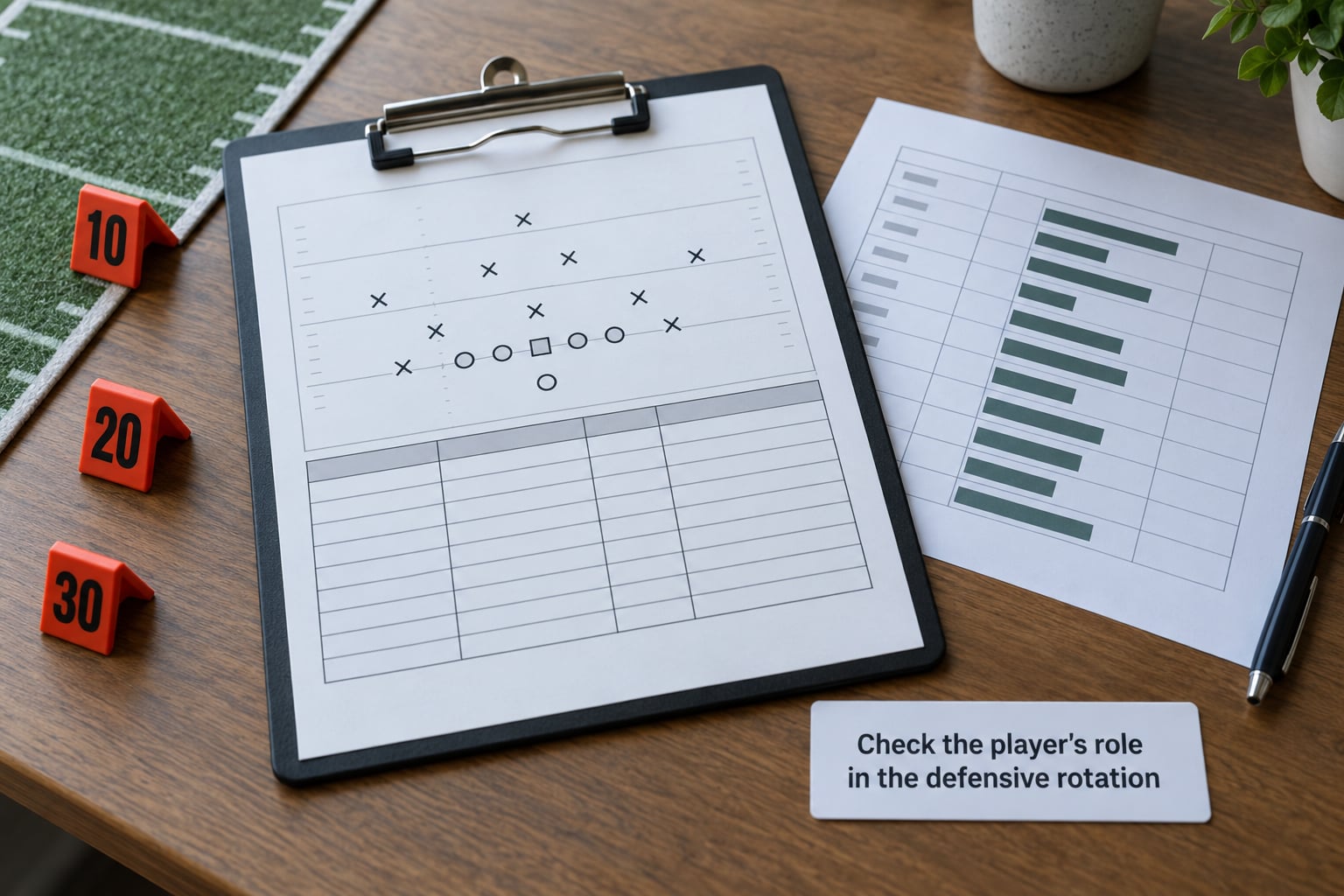
Role decides repeatability. A starting job means your weekly floor is roughly the starter’s typical output. A rotation job means your ceiling depends on matchups and scripted touches.
Ask three questions. Does he own a first-team job, and is anything in front of him likely to lose it? Did his alignment change, such as a box look or a permanent slot role? Has someone gone down, and is this player the one the coaching staff has already given the extra reps?
Rookies earning 90 percent or more of defensive snaps are treated in IDP communities as the best long-term pickups, because the volume usually arrives before the highlight plays do. That is a dynasty argument, but the snap share makes it a useful redraft signal too.
3. Look for volume and matchup advantages
Production is downstream of volume. Sort on snap share, then read the matchup. A linebacker who runs 90 percent of snaps against a team that throws over the middle has a genuine tackle opportunity edge, regardless of what he did last week.
Same logic at the pass rush. Pass rush win rate and true pass rush sets tell you whether a defender is generating pressure on real dropback situations or only against the run. Safeties are the hardest to project, so weight their deployment: a deep alignment cuts tackle chances, a box alignment raises them.
| Position | Snap share to add | Target band | Common trap |
|---|---|---|---|
| Linebacker | 70 percent or higher | Sole or top-8 weekly scorer | One 14-tackle game with low snap share behind it |
| Defensive lineman | 60 percent or higher | Top-12 defensive lineman, plus sacks | Two-sentence stat lines that never reach the lineup |
| Defensive back | 80 percent or higher | Top-10 defensive back, tackles plus deflections | Chasing interceptions from a deep-shell role |
| Edge rusher | 50 percent of pass-rush sets | Top-8 pass rusher | Rotation guys who only rush on obvious run downs |
These are floor thresholds, not ceilings. A defensive back on 80 percent snap share in a big-play-only scoring format is worth much more than the same player in a tackle-only league, which is why step one comes before this one.
4. Project future playing time instead of relying on one game
Nobody’s next four weeks are predictable from one box score. Look at the last three weeks of snaps and ask what caused them. If the trend is a broken bone and an expected return date two months out, the trend is real. If it was a fumble recovery returned for a touchdown, the fantasy points are borrowed.
Managers in IDP forums are blunt about this one. Skepticism is healthy when a recommendation rests on a lucky score rather than repeatable opportunity, and community reaction to those picks tends to sour fast.
Two trends deserve a look: a player climbing the depth chart after a rotation reshuffle, and a player whose snaps dropped in a game his team played from ahead. The second is a game-script artifact, not a demotion.
5. Compare the player with the current waiver replacement
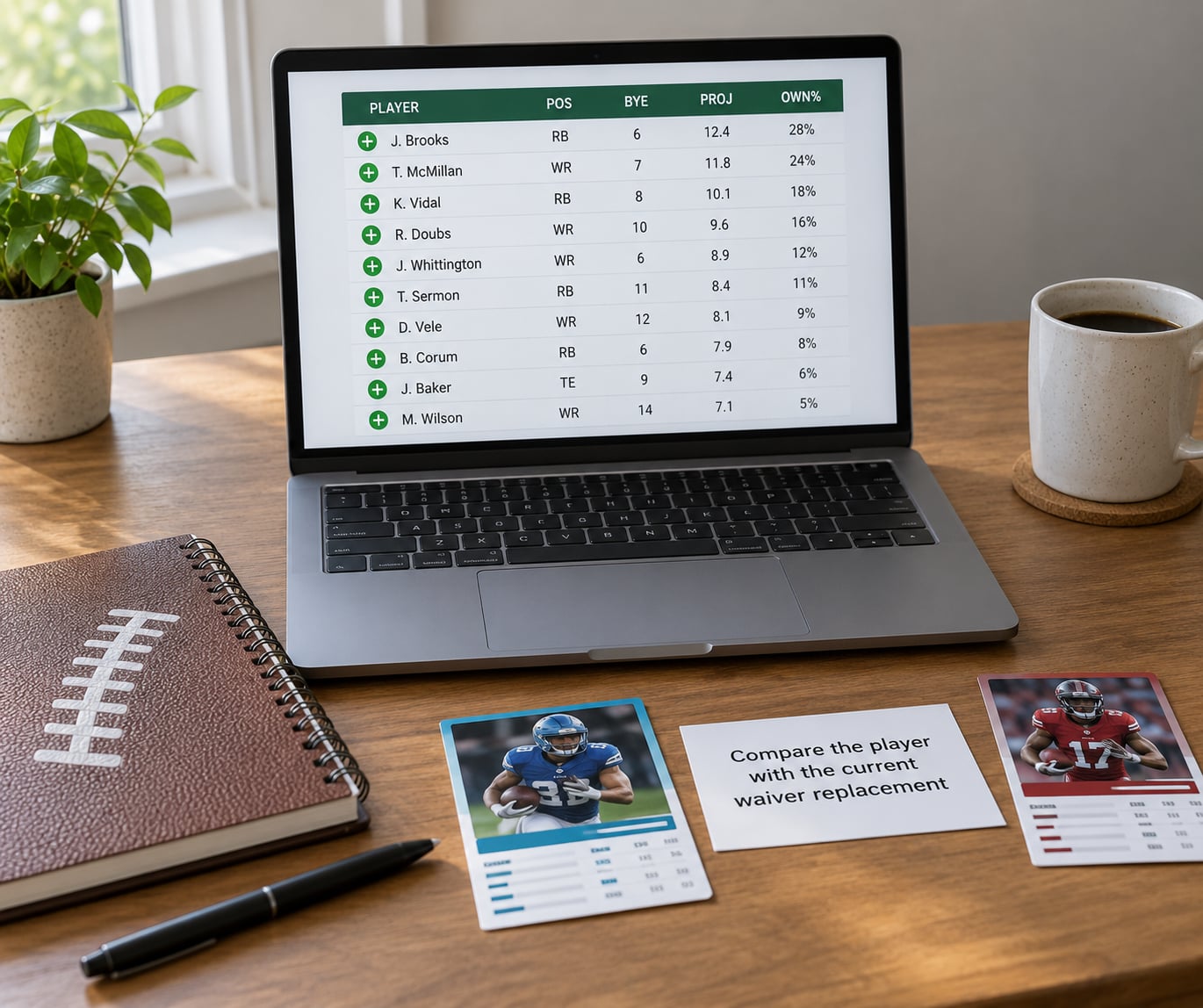
An add is a swap, not a gift. Decide who comes off your roster before you submit anything, because a claim that leaves you without a substitute for an injury is a problem three weeks from now.
Compare expected weekly production against your replacement, and compare it against the realistic bid. If the only thing separating them is a projected six-point week, streaming your current player is fine and spending a third of your budget is not. You also want a drop candidate identified in advance, because IDP rosters fill with injured, bye-struck and underused players and those are your currency.
In redraft, the calculus is next four weeks. In dynasty, a 22-year-old defensive back playing 80 percent of snaps has value well beyond the current scoring week, and the bid reflects that youth rather than this week’s tackle count.
6. Check the schedule beyond the immediate week
The coming opponent is the easy part. Look two and three weeks out for divisional games, because those stay close longer and produce more defensive snaps for everyone involved. Note bye weeks, since a defender with a bye in six weeks needs a bigger case than one who plays every week.
Watch for offenses that keep giving up sacks and for divisional opponents that play slow, because a low-volume game punishes pass rushers and rewards box defenders. Also check your playoff positioning: in week 14 with a six-point lead, a low-variance tackle defender beats a boom-bust pass rusher every time.
7. Make a disciplined add-drop decision
Final checklist, and claim only when all five are true:
- The player has a real opportunity: snap share, a starting job or a rotation role with defined snaps.
- That opportunity is expected to continue for at least three more weeks.
- The matchup over that span is neutral or better.
- Your drop candidate is already chosen, so you are not trading a starter for a lottery ticket.
- Your bid exceeds what a league rival would put in, which means knowing the waiver order.
That last point is where most managers lose the race. Waivers process at a set time, and priority usually rolls back toward the top of the standings at the start of each week unless your league is configured otherwise. Find your current position in your league’s settings or standings page before you bid, not after. Bidding at the same second as everyone else is a coin flip; bidding early with a number above the likely competition is how you win the player you actually wanted.
If you did lose out, do not chase the next name out of frustration. Re-run the filter. In an IDP pool, there is almost always another defender with the same profile three lines further down.
Common Mistakes
Chasing one big game. The fix is simple: a stat line without snap share behind it is not evidence. Require the snaps before you consider the points.
Overvaluing tackles. Ties, tackles for loss and pass deflections decide more weekly linebacker matchups than raw tackle totals, and several leagues score them. Check your settings instead of assuming a tackle-first format.
Ignoring positional requirements. A format that requires a cornerback or an IDL starter turns a great nose tackle into a liability. Verify eligibility before you bid, because cross-position eligibility on some platforms genuinely justifies a higher bid.
Forgetting that the linebacker pool dries out first. Managers repeatedly note that linebackers become uncontested the moment injuries pile up. If you see two linebacker names on the wire in the same afternoon, move early.
Bidding without knowing the waiver order. Set your number from rival behavior instead of gut. Five percent of your budget against a competitor who will bid ten is a wasted claim; the same player at fifteen is a steal.
Changing something with no replacement plan. Dropping your starting linebacker in week 9 with a thin bench is how rosters collapse late. Identify the substitute first, every time.
Frequently Asked Questions
How do I find good IDP waiver pickups when recent stats are not reliable?
Ignore the stat line and sort on opportunity. Filter your free agent pool by position, sort by defensive snap share, and look for players whose snaps rose for a structural reason such as a new starter, a scheme change or a promoted rookie. Then verify the matchup. Three weeks is a small sample, so a player with stable snaps and a bad matchup is a better add than one with a great stat line and 40 percent snap share.
Should I prioritize defensive tackles or pass rushers for IDP waiver claims?
It depends on your scoring. Tackle-first leagues favor defensive tackles with 60 percent or more of defensive snaps, because their points come from volume every week. Pass-rush-heavy or big-play formats favor edge rushers who see a real share of pass-rush sets. Check which category your league actually rewards before deciding, because the two positions produce very different stat lines from the same snap count.
What defensive positions are most useful in a typical IDP league?
Linebackers are the most useful and the most contested, since tackle opportunity is predictable and a starting middle linebacker usually finishes near the top of weekly linebacker scoring. Defensive linemen follow, driven by sacks and tackles for loss. Defensive backs are the most volatile, with production swinging on interceptions and deflections, so they reward a more conservative bid. Always confirm your league’s positional requirements first.
Is an IDP player on waivers worth adding if he only played a few snaps?
Only if the snaps come with a defined role. A defender with limited snaps who handles punts, kickoffs or a specific coverage responsibility has a repeatable floor worth adding. The same snap count without a special-teams job is not a foundation, since it can shrink as quickly as it grew. Special-teams roles are the exception to the snap-share rule, not a replacement for it.
How early should I check the waiver wire during a fantasy football season?
Run the filter twice a week: once on Tuesday, once on Thursday evening after the final injury reports. Most waiver processing happens overnight, so a Thursday bid reflects the most accurate injury picture and usually clears before rivals bid on Friday morning. Weekly or twice-weekly is enough. Checking constantly produces no extra information and costs the rest of your process.
When is it better to leave an IDP waiver pickup on waivers?
Leave him when the snap share is trending down, when the opponent is an offense that suppresses his scoring category, or when the bid required most of your budget for a projected six-point week. Also leave him when you have no drop candidate, because an add without a replacement can leave your lineup short later. Streaming an existing starter is usually the better risk at that price.
Conclusion
Start every week in the same order: check your league’s scoring and eligibility rules, then screen the pool by role, snap share and matchup, project playing time across three weeks, choose your drop candidate, and bid above the competition. How to find IDP waiver pickups comes down to that sequence rather than to whoever published the longest list of names on Monday. Last reviewed for October 2026; the method holds through any season, and the numbers reset weekly.