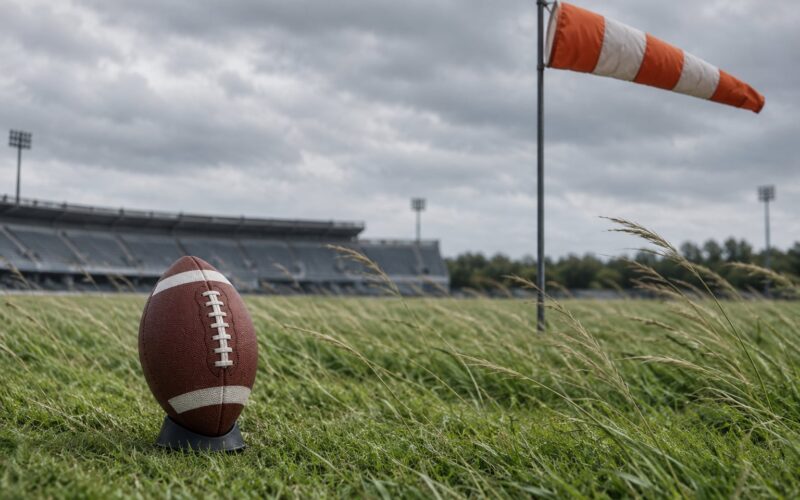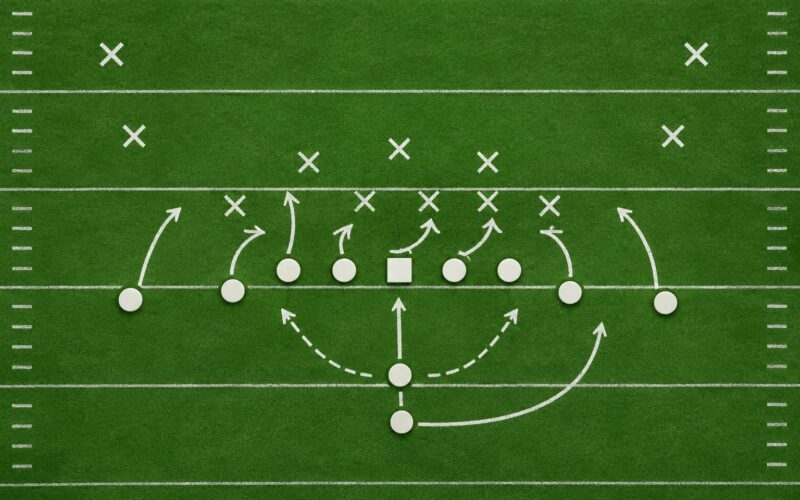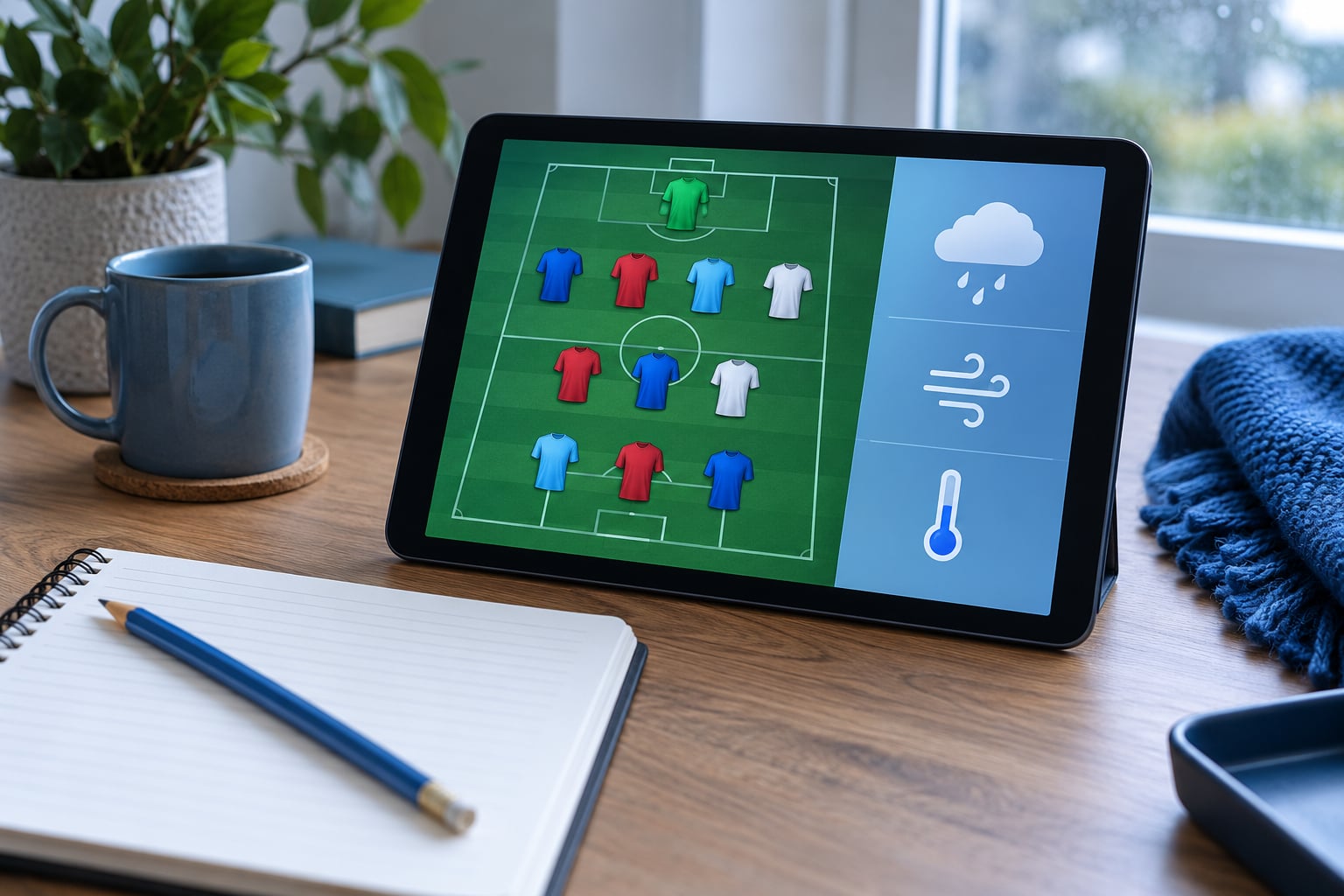
Weather matters most when it changes how many passes a quarterback attempts, how deep those throws go, and how far a kicker has to swing through a wet ball. On a clear October afternoon inside a dome, wind is zero and most of the reason owners scramble for a last-minute adjustment disappears. Rain, sustained wind above roughly 15 mph, snow and hard cold all push games toward short-yardage rushing, which cuts fantasy scoring for wide receivers and kickers while cushioning running backs.
The honest version is that weather is a tiebreaker, not a decision on its own. Two quarterbacks with the same projection should still be ranked by role, matchup and script. Weather tells you which way to lean when those things are close.
Table of Contents
- How Weather Affects Fantasy Football Scoring
- Why Weather Changes Player Performance
- How Rain, Snow, Wind, Cold, and Heat Affect Players
- How Weather Affects Fantasy Football Scoring Formats
- Which Positions Are Most Weather-Sensitive?
- How to Use a Weather Forecast Before Games
- When Weather Should Change Your Projections
- How to Adjust Player Projections Without Overreacting
- Frequently Asked Questions
- Does wind really hurt fantasy football quarterbacks?
- Should I downgrade a player because of rain before a game?
- Does weather matter more in PPR leagues?
- Are domes safer than outdoor games for fantasy projections?
- How much should I adjust projections for cold or snow?
- Should weather be the deciding factor in start or sit decisions?
- Conclusion: What Weather Should Change First
How Weather Affects Fantasy Football Scoring
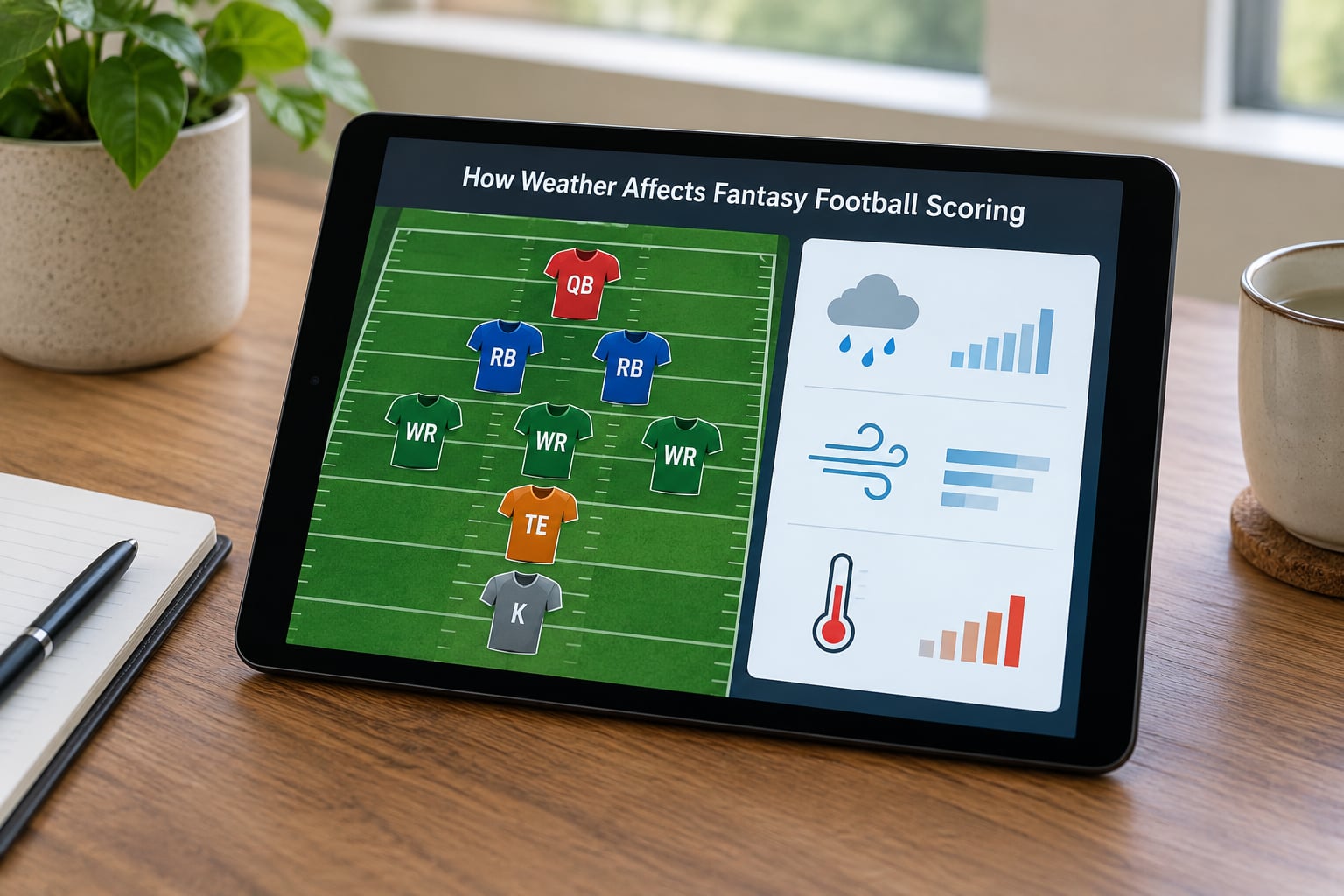
Fantasy scoring reacts to weather in two separate ways. The first is production: fewer completions, shorter throws, fewer kickoffs in range, more runs. The second is format, which decides how much a drop in production costs you. A 15-yard reception lost to a misthrown ball costs a standard scorer nothing and a PPR owner a full point.
Here’s the cheat sheet. The numbers below are the thresholds owners on forums like r/fantasyfootball and the analysts cited in the research consistently use as rules of thumb, not official league values.
| Condition | Threshold | What usually happens | Position to lean on |
|---|---|---|---|
| Dome game | Roof closed or retracted | No weather effect at all | Use your normal projection |
| Light wind | Under 10 mph | Negligible | Ignore it |
| Moderate wind | 10 to 19 mph | Deep throws pulled back, field goals go shorter | Running back, check the kicker |
| Strong wind | 20 mph or higher | Downfield passing game shrinks, kickers get shaky from 45 yards | Fade the kicker, avoid air-it-out receivers |
| Cold | Below 32°F | Less throwing and kicking, more running, more ball security | Running back, mobile quarterback |
| Heavy rain | Sustained, plus wind | Slippery footing, more run calls, lower catch quality | Running back |
| Snow or sleet | Any accumulation | Worst footing of the year, game scripts get conservative | Running back, low passing volume |
| Heat | Above 90°F at kickoff | Faster pace early, rotation in the fourth quarter | Two-minute backfield pieces |
Games are not routinely cancelled for cold alone. They have been moved, shortened or relocated for ice, lightning and wind so severe that officials cannot safely run play, which is a different threshold entirely from the one that hurts your scoring.
Why Weather Changes Player Performance
Three physical things happen in bad weather: the ball changes, the footing changes, and the play calling changes. Which of those dominates depends on the stadium and the teams involved more than on the forecast headline.
The ball is the biggest one for passing games. Cold air makes the ball denser, which cuts how far it carries and pushes quarterbacks toward shorter throws. A wet ball resists the spin that quarterbacks rely on for tight spirals, so throws that would sit on a dry field arrive on the wrong hip.
Footing explains why rain and snow usually help running backs. A runner who makes one cut in the air gets one cut in the grass and stops. A receiver working an out route against a corner with a bad surface loses the timing he needs to separate.
Wind is the exception to most of the good news owners expect from rain. Rain and snow tend to slow the game and produce fewer possessions. Wind does not slow anything, it just tilts the field of play, and that hurts the two positions whose fantasy value comes from distance: receivers running deep routes and kickers beyond about 45 yards.
How Rain, Snow, Wind, Cold, and Heat Affect Players
Here is how weather affects fantasy football scoring condition by condition, and who feels it:
- Wind. Sustained wind above 20 mph suppresses the deep passing game and pushes field-goal attempts inside 45 yards. That cuts kicker scoring more reliably than it cuts quarterback scoring, because kickers have a single outcome and quarterbacks can salvage a day with 250 passing yards and a rushing touchdown.
- Rain. Steady rain with no wind usually means a higher run rate, not a lower scoring game. Running back volume climbs, catch quality drops slightly. Forum discussions in r/fantasyfootball frequently note that quarterbacks built for designed runs, like Josh Allen and Jalen Hurts, keep a scoring floor in wet games because the offense keeps handing them the ball.
- Snow. Snow hurts everyone equally, which oddly makes it easier to project. Offensive coordinators who plan for slush tighten their formations, and scoring drops across the board rather than shifting between positions.
- Sleet and freezing rain. Owners on the r/fantasyfootballadvice boards and football forums consistently rate sleet as the worst condition for wide receivers. The ball is wet and the surface is ice, and that combination produces the highest volume of drops in a season.
- Cold. Below freezing, teams lean on run game and short-yardage passing. Warm-weather stars lose a couple of points, and the running back who is the goal-line back does not lose anything at all.
- Heat. Above 90°F, the opposite pattern shows up. Pace picks up early, the ball moves, and fourth-quarter rotations cost a share of the projections you counted on at breakfast. Dome teams are immune to all of it.
How Weather Affects Fantasy Football Scoring Formats
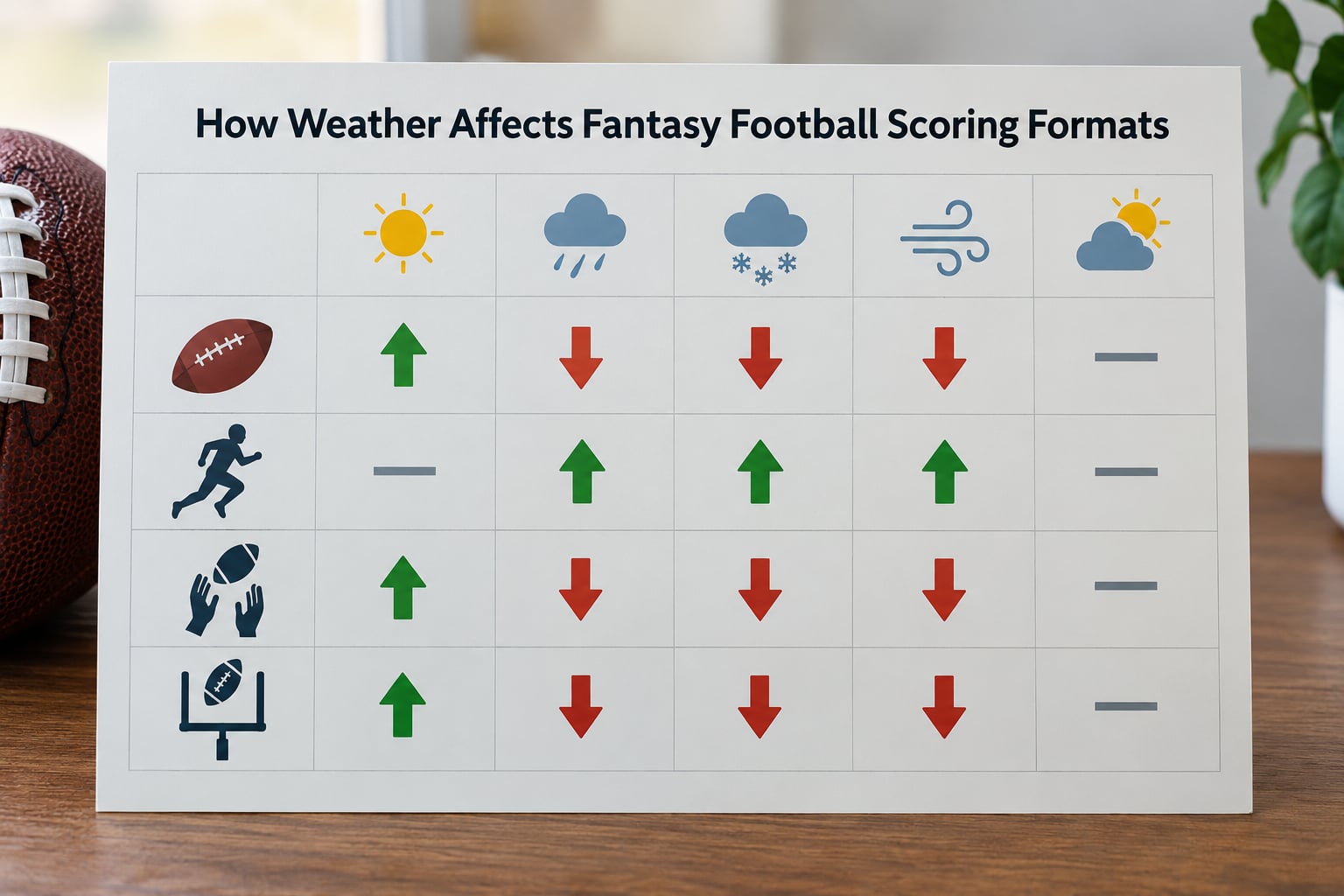
The condition gets you the new production. Your league format decides what that production is worth, and this is where most of the research on the topic comes up empty. Most published comparisons stop at position splits and never address the format question head on.
PPR owners carry the most weather risk, and it is worth saying plainly. Every failed deep ball is a lost full point, every dropped pass is a lost full point, and a 15-yard completion that gets broken up is worse for you than it is for the quarterback. Standard owners absorb the same bad game with less damage because only yardage totals and touchdowns count. Nobody scoring yards-per-point needs to care much either way.
Kicker-heavy scoring is where weather shows up most visibly, because a single 50-yard miss costs several points and there is no partial credit. The same wind that adds half a point to a running back’s total can subtract five from a kicker’s.
| Scoring format | Weather effect on passing | Weather effect on rushing | Most exposed position |
|---|---|---|---|
| PPR | High | Low | Receiver in a downfield passing game |
| Standard | Moderate | Low | Quarterback passing yards and TD rate |
| Yards per point | Low | Low | Nobody, this format is close to weather-proof |
| Kicker points (with distance bonuses) | Low | None | Kicker and the kickoff returner |
| Superflex bonus-heavy | High | Low | Any starter who needs a big play to hit a bonus |
Which Positions Are Most Weather-Sensitive?
Kickers rank first for sensitivity, and nobody debates it. Their range is the one skill most exposed to wind, and the ball is the one object most changed by rain and cold. Many managers stream kickers purely on dome status late in the season, taking Atlanta, Detroit and Indianapolis against outdoor alternatives in December.
Wide receivers rank second in PPR, third in standard. Deep routes and contested 50/50 balls are the plays weather takes away, and the cost lands entirely on you in a per-reception league. Tight ends slide down the list because a high-volume target works short routes and catches short passes, which weather barely touches.
Quarterbacks sit in the middle, and this surprises people. Their floor comes from volume and their ceiling comes from deep completions, so a mobile runner keeps scoring even when the passing game dies. Cold-weather dual-threat quarterbacks are among the more reliable fantasy starts in December for exactly that reason.
Running backs are the least sensitive and the only position that gains. Play calling moves toward them, and the goal-line back gets extra work in a weather game more often than not. Defenses rank somewhere between tight ends and receivers, since turnovers and sacks matter more than yardage in most formats.
How to Use a Weather Forecast Before Games
Most owners check weather too late and read it too loosely. A workable process takes about ten minutes, and the order matters more than the tools.
- Check dome status first. If a roof is closed or retracted, you are done. A retractable roof at a cold-weather stadium is the single most useful piece of information on this list.
- Read sustained wind, not gusts. Forecast apps show both and managers fixate on the gust number. Sustained wind at kickoff matters; a 25 mph gust in a 12 mph breeze barely registers on a deep ball.
- Look at wind direction for downfield offenses. A quarterback whose team throws primarily in one direction against a wind coming straight off it faces a headwind. A crosswind is a different problem, pushing passes laterally and hurting receivers who rely on precise routes.
- Check precipitation type and accumulation, not just chance of rain. A 30 percent chance of nothing and a steady drizzle matter differently.
- Read the injury reports after you read the weather. Weather news triggers late-week reports, so a hamstring that showed up Wednesday morning may simply be a player who told the team his calf was tight in the cold.
- Compare the betting total to the weather. A total that has dropped several points from its opening number usually means the market priced the weather in already, and your own discount should be smaller.
When Weather Should Change Your Projections
Make modest adjustments, not rewrites. The scale below is roughly what experienced managers use, and it scales the change to the player’s role rather than to the forecast headline.
- Tier 1, no change. Dome game, or wind under 10 mph. Ignore weather entirely.
- Tier 2, small nudge. Wind 10 to 19 mph or rain with light wind. Trim a kicker by a point or two and prefer running back projections over receiver projections.
- Tier 3, real adjustment. Wind at 20 mph or higher, sleet, or snow with accumulation. Fade outdoor kickers, downgrade air-it-out receivers, and shift a small share of a borderline ranking toward running backs.
- Tier 4, no projection. Ice, lightning suspensions, or a relocated game. A player playing at an unfamiliar venue has a floor you cannot model, so treat the projection as unusable and pick on role.
If you find yourself moving a player more than a few points on weather alone, you have crossed from reacting to information into reacting to noise.
How to Adjust Player Projections Without Overreacting
Weather is one input among six, and it ranks below five others that are harder to see and easier to change.
Role beats weather. A kicker on a team that misses few field goals inside the 40 survives a windy afternoon better than a kicker whose entire job is range, regardless of either player’s projection. Before you shave points for wind, check what the player’s actual job is.
Game script beats weather. A team that trails in the fourth quarter will not run the ball to protect a lead. Rain does much less to a trailing offense than the raw condition suggests, and the same is true for wind.
Offensive line and injuries beat weather. If a guard is out, the run game is already compromised and the passing game may benefit. Weather is additive to what is already broken, not a substitute for it.
Volume beats efficiency. Total opportunities decide weekly outcomes more reliably than points per touch. A receiver with 12 targets on a wet afternoon still puts up a usable line even if a ball or two bounces off a glove.
Schedule shape matters most in December, when playoffs concentrate the weather. Weeks 15 through 17 reliably hold the coldest games of the season, and the research on playoff weather patterns is where a consistent edge shows up: build your kicker plan around dome teams before those weekends, not during them.
Frequently Asked Questions
Does wind really hurt fantasy football quarterbacks?
Wind hits quarterbacks less than it hits kickers or receivers. Quarterbacks keep scoring through volume, and mobile dual-threat runners have a rushing floor that bad weather does not remove. What wind kills is the deep passing game, which costs receivers more in PPR and costs quarterbacks their ceiling rather than their floor. Judge the quarterback, then apply the weather to his receivers.
Should I downgrade a player because of rain before a game?
Usually not for rain alone. Steady rain without wind tends to raise rushing volume, and the running back in that game gains rather than loses. Snow, sleet and freezing rain are the ones that justify a downgrade, since they cut catch quality and force conservative play calling. Check the wind reading before you change anything based on precipitation alone.
Does weather matter more in PPR leagues?
Yes, and the gap is meaningful. In PPR, every dropped pass and every broken-up deep ball costs a full point, so passing losses land directly on your total. Standard scoring only counts yardage and touchdowns, which softens the same losses considerably. Yards-per-point formats are the least sensitive of the three.
Are domes safer than outdoor games for fantasy projections?
Domes are the safest possible answer because there is no weather variable at all. Any retractable roof matters even more, since a closed roof in a cold-weather stadium removes the conditions owners usually fade. The one dome caveat is heat, which is a controlled but real factor in a handful of stadiums.
How much should I adjust projections for cold or snow?
Keep adjustments to a point or two for cold and two to four for snow with accumulation. Below 32 degrees the game gets shorter and run-heavy, which usually shifts points from receivers to running backs rather than removing them. Reserve large changes for ice, sleet and wind at or above 20 mph.
Should weather be the deciding factor in start or sit decisions?
No. Weather should be the tiebreaker between two players who are otherwise close, not the reason to bench a strong play against a weak matchup. A high-volume target still posts a usable line in rain, and a player on a bad offensive line is already in trouble before the forecast. Check role and matchup first, weather second.
Conclusion: What Weather Should Change First
Start with the roof. If it is closed or retracted, weather does not enter the decision at all, and that single check removes the majority of unnecessary adjustments across a season.
Then look at sustained wind at kickoff rather than gusts, because wind changes passing and kicking far more than any other single factor. After that, identify which positions in the game are actually exposed: an outdoor kicker and a deep-threat receiver are, and a short-route tight end is not.
Adjust conservatively and then stop. A point or two on a kicker is a reasonable read; a five-point cut usually means the betting market already moved and you are reacting twice. Understanding how weather affects fantasy football scoring pays off when it settles a close call in the right direction, not when it becomes the reason for the call.
Finally, confirm your league’s scoring rules before you apply anything. PPR owners carry more weather risk than standard owners, and knowing which format you are in tells you how much any of this matters to your team.