Pace of play is the average number of offensive plays a team runs per game, measured in plays per game or seconds per play. Fantasy points come from rushes, receptions, targets and passing attempts, so a faster offense creates more chances to score in the same 60 minutes of game time. Pace is volume, not efficiency, and on its own it produces nothing.
That last sentence is where most managers get it wrong. They see a team ranked near the top in pace, start the high-variance players on that roster, and then wonder why a 38-play team outscored a 68-play team on the same Sunday. What follows is how pace actually flows into fantasy scoring, how it changes with the score, and how to fold it into a weekly research routine without fooling yourself.
Table of Contents
- How Pace of Play Affects Fantasy Football Scoring
- Pace of Play vs. Total Play Volume
- How Each Position Scores From Pace
- Why Running Backs Are Most Sensitive to Game Script
- Why Receivers and Tight Ends Benefit From Passing Volume
- Why Quarterback Pace Matters More Indirectly
- How Pace Changes With the Score and Opponent
- How to Use Pace in Weekly Fantasy Research
- Pace Trends for Redraft and Dynasty Leagues
- Frequently Asked Questions
- Does a fast pace always mean more fantasy points?
- Is pace of play the same as offensive ranking?
- Should I start a fast-paced running back every week?
- How does pace affect wide receivers and tight ends?
- Can pace of play be useful in dynasty leagues?
- Conclusion: Start With the Expected Game Script
How Pace of Play Affects Fantasy Football Scoring
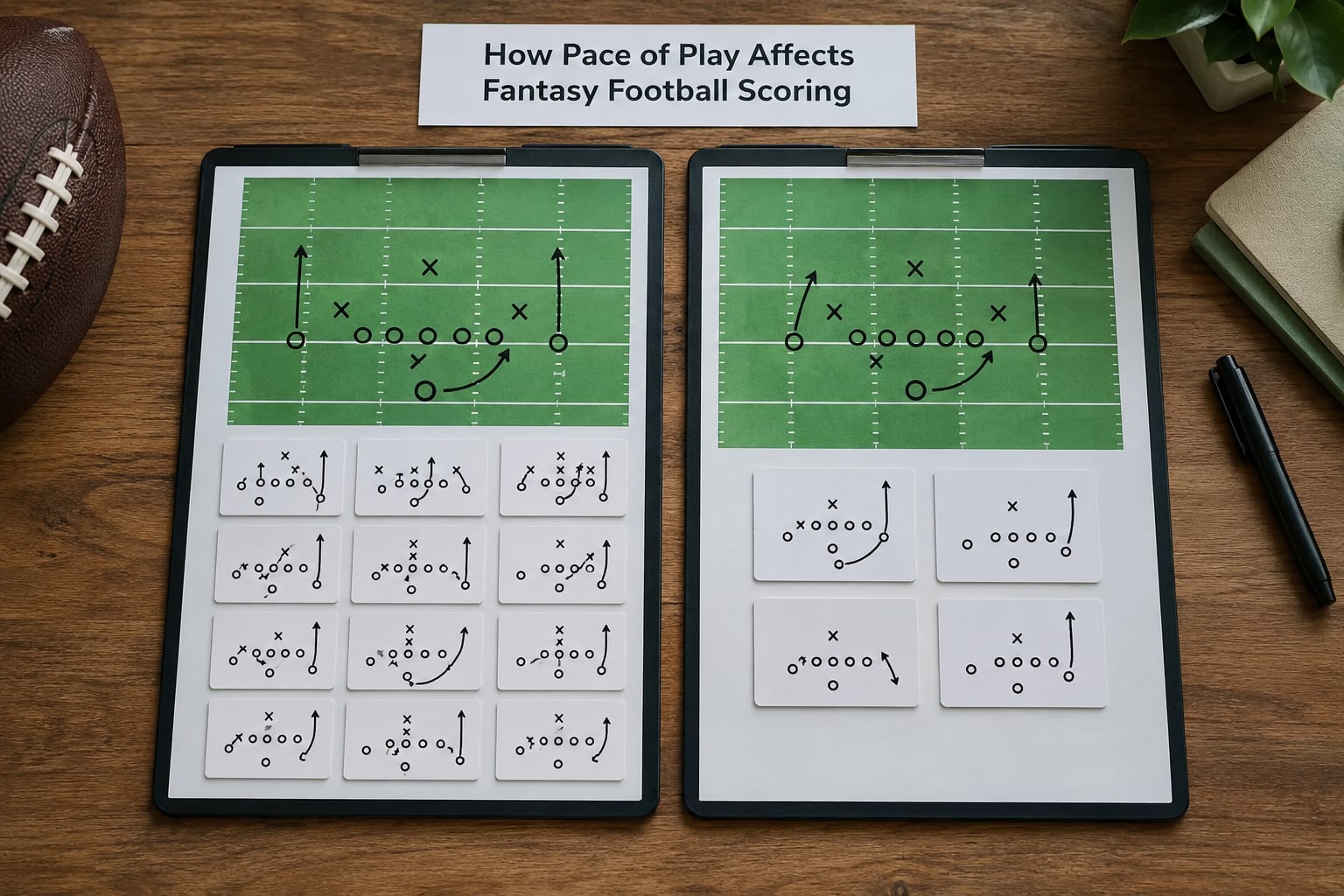
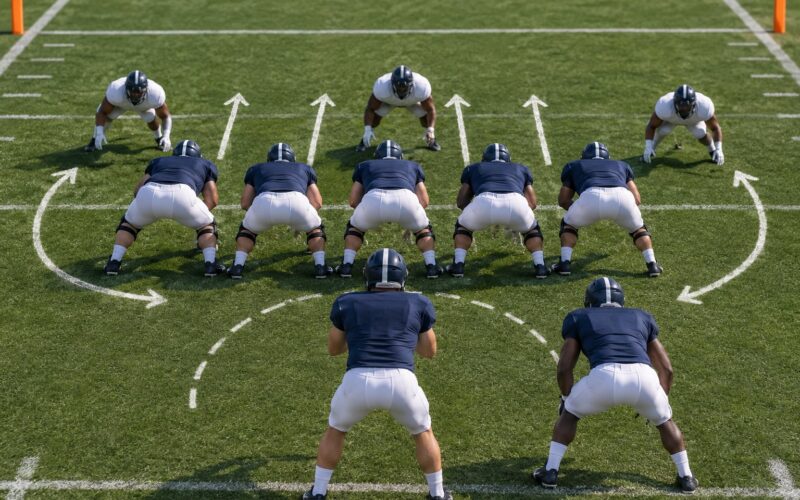
Pace of play is how many offensive plays a team runs per game. A fast offense might run 65 to 70 plays from scrimmage, while a slow one settles around 50 or fewer. Because fantasy points are earned on individual plays, that gap is the raw material for a scoring difference between two identical play callers.
The definition people usually mean by tempo is different. Seconds per play measures how quickly a team gets from one snap to the next, usually through no-huddle usage. A team can run fast between snaps and still run only 55 plays because it loses possession cheaply or runs the clock out of bounds late. Pace is the total. Tempo is the clock.
Snap share matters too. Two offenses can both run 63 plays, but one concentrates those snaps in three players and spreads the rest across nine. Fantasy output follows the distribution, not the total.
| Measure | What it tells you | Rough league band | Expected fantasy effect |
|---|---|---|---|
| Plays per game | Total offensive snaps from scrimmage | 50 slow, 63 typical, 68+ fast | More chances for everyone on that offense |
| Seconds per play | Tempo between snaps, no-huddle driven | Under 24 quick, near 27 slow | Tempo alone adds few extra snaps |
| Neutral pace | Plays per game in a tied, even score state | Baseline habit, script removed | The most reliable weekly fantasy baseline |
| Adjusted pace | Plays versus what the score situation expected | Plus or minus 3 to 4 plays of script noise | Tells you if a team is living up to its style |
| Pass rate over expectation | Passing tendency versus opponent and game state | About 40 to 60 percent is normal | Predicts whether the extra plays reach your WR |
| Plays allowed per game | What the opposing defense lets teams run | Mirror image of the offense | Sets the floor for volume in any matchup |
That table is the honest version of the idea. Pace opens the door; the split of plays and the quality of those plays decide who gets paid.
Pace of Play vs. Total Play Volume
A team can be fast on the clock and slow on the scoreboard, or the reverse. Think about a touchdown-heavy offense that runs 24 plays, eight of them goal-to-go, and finishes with 31 points. That team is not fast. It is just efficient on a small sample of high-leverage snaps.
Compare it with a grind-it-out unit that runs 62 plays, punts four times and never crosses midfield. More volume, fewer fantasy points. The volume existed but the chances were low-leverage and spread thin.
So how pace of play affects fantasy scoring depends on two inputs, not one. Your offense has to survive the drive, and the defense in front of it has to keep creating possessions. Plays per dropback splits pace by offensive snaps and dropbacks, which tells you how many snaps a passing attempt actually costs.
Opponent pace is the piece most analyses skip. If a defense allows 70 plays a game, your offense probably gets its full menu even when the game script turns ugly. If it allows 48 and forces long third downs, your offense may run 55 plays no matter how up-tempo its playbook is.
How Each Position Scores From Pace
Pace is an opportunity multiplier, and it does not distribute chances evenly. Wide receivers collect volume first because passing plays create targets. Running backs are hit hardest by game script rather than by tempo itself.
| Position | How pace reaches them | Volatility from pace alone | Scoring format that feels it most |
|---|---|---|---|
| WR | More pass attempts means more routes and targets | High and mostly upside | PPR |
| QB | More dropbacks, attempts and red zone trips | High, offset by turnovers | Superflex and standard |
| TE | Targets rise in pass-heavy scripts | Moderate, role-dependent | PPR |
| RB | More carries, but only when the script allows | Low in neutral scripts, high when trailing | Standard |
Why Running Backs Are Most Sensitive to Game Script
Running back volume is the one place where a fast-pace label can actively mislead you. Teams ahead by two scores tend to protect the lead: more clock-killing runs, fewer plays overall, and negative rushing attempts that drag a back’s average down.
Work through an example. A back on a neutral-pace offense projects 20 carries. If that team falls behind 14 in the fourth quarter, carries drop toward 12 because the offense is throwing, yet the same player may get six targets as a check-down option. Standard scoring punishes that badly. Half-PPR or full PPR claws back some of it.
Trailing teams also add late-game red zone trips, which is where the extra fantasy points actually live, and extra snaps late in a shootout come with more fumble exposure. The script decides the workload before the tempo does.
Why Receivers and Tight Ends Benefit From Passing Volume
Every extra pass attempt is one more chance at a target, and a target count is what separates a 30-point week from a 9-point week at wide receiver. Teams with a genuine pace advantage combined with a pass rate above expectation give their receivers more routes per game than the schedule suggests.
Air yards and shot attempts are where the separation shows up. A pass-favorable opponent that concedes explosive plays turns raw volume into big weeks, while a coverage shell that limits explosive throws can produce plenty of targets and very little scoring.
Tight ends follow the same channel with a role caveat. A team that throws 45 times a game will feed its primary receiver far more than the second tight end, so pace helps the position in aggregate while the individual depends on snap share.
Why Quarterback Pace Matters More Indirectly
For quarterbacks, pace raises the attempt count and the number of scoring chances. That part is straightforward. What complicates it is that volume arrives alongside sacks, turnovers and a longer series of low-value plays that a heavy pass rate can produce.
So a quarterback on the fastest offense in the league can still finish a season below one running a slower script if the fast offense converts poorly in the red zone. Pace lifts the ceiling. Efficiency decides where the ceiling lands.
How Pace Changes With the Score and Opponent
No team plays at its neutral pace for 60 minutes. A baseline number only describes the situation where scores are tied, so your weekly adjustment runs from four inputs: expected score, defensive plays allowed, home context and recent game-state tendencies.
| Situation | What typically happens | Fantasy read |
|---|---|---|
| Projected favorite | Slower neutral pace, more clock control, fewer risky passes | Volume ceiling drops, efficiency holds up |
| Projected underdog | Faster pace, more passes, fewer early-down runs | Passing volume rises for the trailing side |
| Opponent allows few plays | Long drives, few possessions, compressed script | Fewer chances for everyone on the offense |
| Opponent allows many plays | More possessions for both teams | Baseline volume holds even in a bad script |
Vegas team totals are the fastest way to set expectations here. A 26-point implied total suggests a comfortable script and moderate volume, while a 17-point implied total usually means a team is playing from behind and passing more in the second half.
Recent game-state splits are the confirmation layer. A coaching staff that has run 70 percent of its plays from scrimmage while trailing in eight straight games is not a neutral-pace team in practice, whatever the season average says.
How to Use Pace in Weekly Fantasy Research
Here is the routine I use before locking a lineup. It runs about fifteen minutes and it stops me from building a stack on a team that was only ever fast because it was behind.
- Start with baseline pace. Pull neutral pace for both teams, not raw pace. Ignore the number if the sample is under about five games.
- Add plays allowed. Check what each defense allows per game. That sets the realistic snap ceiling for the matchup.
- Read the play-calling split. Pass rate over expectation tells you whether extra snaps turn into targets or rushes.
- Look at offensive personnel. Multiple tight ends and a low implied total mean run-heavy, protection-first football and a smaller ceiling.
- Check the opponent’s tendencies. Do they force long third downs, press the line or play two-high? Any of those shrink volume.
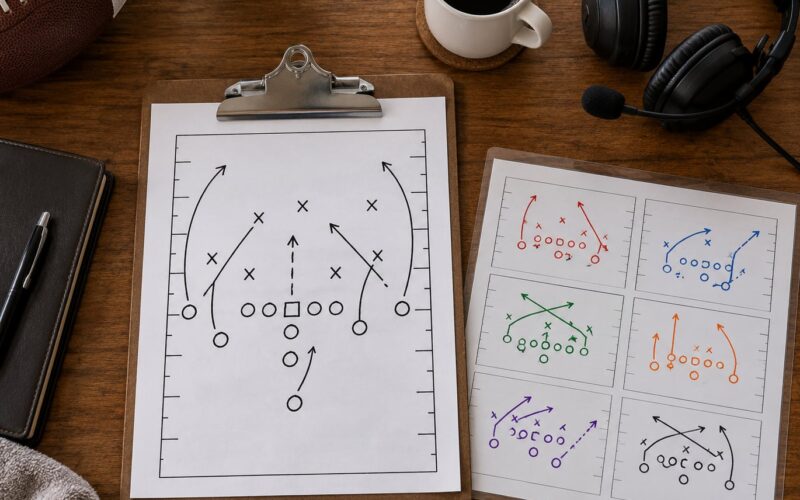
- Project the game script. Use team implied totals to decide whether you are projecting a neutral or a trailing offense.
- Match the scoring format. Volume converts differently at 0.5 PPR than in standard, so weight targets higher or lower accordingly.
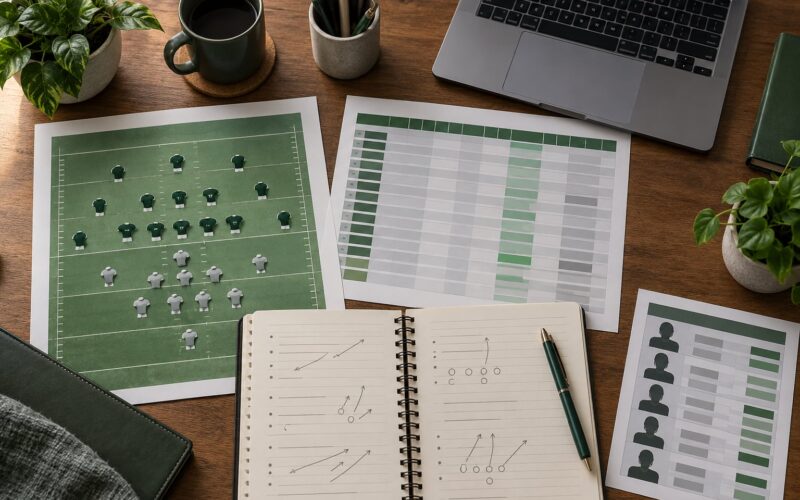
Where to get it matters less than what you take from it. Free play-by-play data through Pro Football Reference and public nflfastR releases will give you plays from scrimmage, pass rate splits and game-state splits directly, while weekly pace reports from FTN and the Fantasy Footballers cover game stacks and composite scores. Anyone gating the basic numbers behind a subscription is selling you a convenience, not data.
Three pace rankings mislead me most. Raw pace with no game-script split, offense pace with no defensive pace next to it, and any “fastest offense” list that ignores red zone conversion. All three sell volume while quietly ignoring whether the volume ever becomes points.
Pace Trends for Redraft and Dynasty Leagues
In redraft, pace is a weekly input. You check it on Sunday morning, apply the script, make the call and move on. Nothing about that process is season-long, and treating it as if it were is how people end up holding a player they should have cut in August.
In dynasty, pace is a trend line. A coaching hire that changes a staff from clock-grinding to up-tempo can add several plays per game and reshape a player’s projection for years, which makes it a trade consideration rather than a lineup one.
The monitoring list for dynasty is different: snap share, role changes, target share, durability and coaching continuity. Pace amplifies all of those, but it does not replace them. A player who survives six seasons on one of the league’s fastest offenses with a stable snap share is the actual asset.
One forum pattern is worth naming without overstating it: redraft and best-ball managers increasingly use team pace to separate the elite player from the merely usable one. Pace amplifies talent, it does not create it.
Frequently Asked Questions
Does a fast pace always mean more fantasy points?
No. Pace is volume, not efficiency. A team running 68 plays per game can score less than a team running 55 if the extra snaps come on third-and-15 or the red zone trips stall. Pace raises the number of chances; conversion decides how many of those chances become points. Treat pace as a ceiling indicator, then check efficiency and red zone volume before acting on it.
Is pace of play the same as offensive ranking?
No. Offensive ranking usually means how good or efficient a unit is, which is closer to points per drive or EPA per play. Pace says how many plays a team runs, not how good they are. A top-ranked offense can be mid-pack in pace, and a very fast offense can rank poorly in efficiency. Keep the two questions separate when you build a projection.
Should I start a fast-paced running back every week?
Not automatically. Running back volume is driven first by game script. When a team is protecting a lead, negative rushing attempts and clock-killing runs push carries down even on a fast offense. Only when the implied total suggests a close or trailing script should pace meaningfully raise your projection. In half-PPR and PPR, pass-heavy scripts are less punishing because the check-downs still score.
How does pace affect wide receivers and tight ends?
Extra plays reach receivers through targets, and targets come from pass attempts, so a fast offense with a pass rate above expectation hands its receivers more chances per game. Tight ends benefit the same way, though the gains concentrate on the primary target at that position. Format matters: at 0.5 or 1 point per reception, the extra volume converts to points far more reliably than in standard scoring.
Can pace of play be useful in dynasty leagues?
Yes, but as a season-long trend rather than a weekly input. When a new coaching staff shifts a team from clock management to an up-tempo offense, plays per game can move by several snaps, and that sustained change belongs in a long-term projection and in trade values. Pair it with snap share, target share, durability and coaching continuity, since pace only amplifies a role that already exists.
Conclusion: Start With the Expected Game Script
If you remember one thing about how pace of play affects fantasy scoring, make it this: pace sets how many chances your players get, and the game script decides whether those chances are rushing attempts or targets. Start every week with the projected script and the opponent’s plays allowed, then check whether the offense is actually living up to its neutral pace.
Only after that does player role matter, and only after that does the scoring format. Do those three in the wrong order and a fast-pace label will send you to the same high-variance players every Sunday.